India is the world's largest producer of mint oils, and most of the menthol used in toothpaste, chewing gum, balms and personal care worldwide starts life in Indian fields. For buyers in the USA, Europe, the UK, South Korea and Australia, sourcing mint oil directly from India means better prices and closer contact with the crop.
This guide explains the three mint oils bulk buyers ask for most, how the Indian season affects supply, and what to check before you place an order.
Peppermint, Mentha arvensis and spearmint: what is the difference?
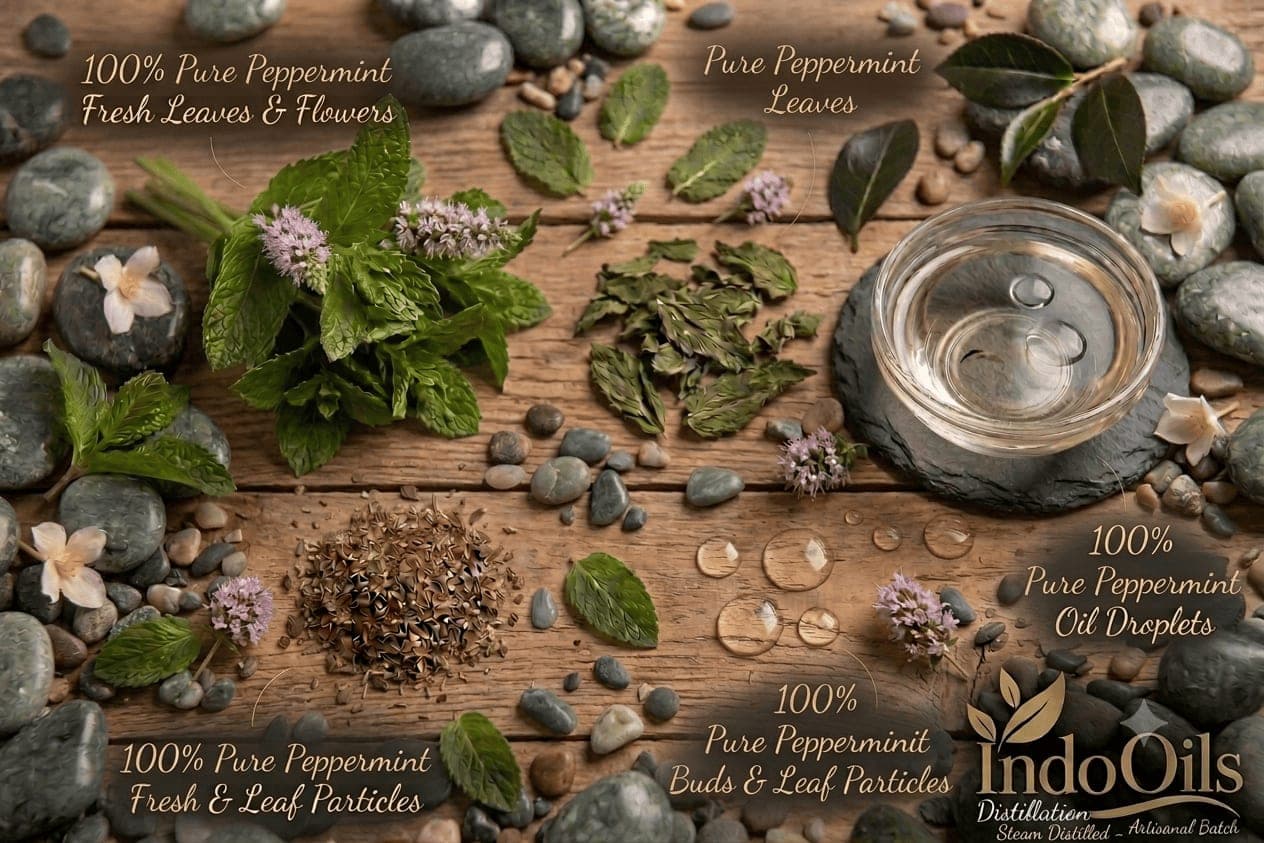
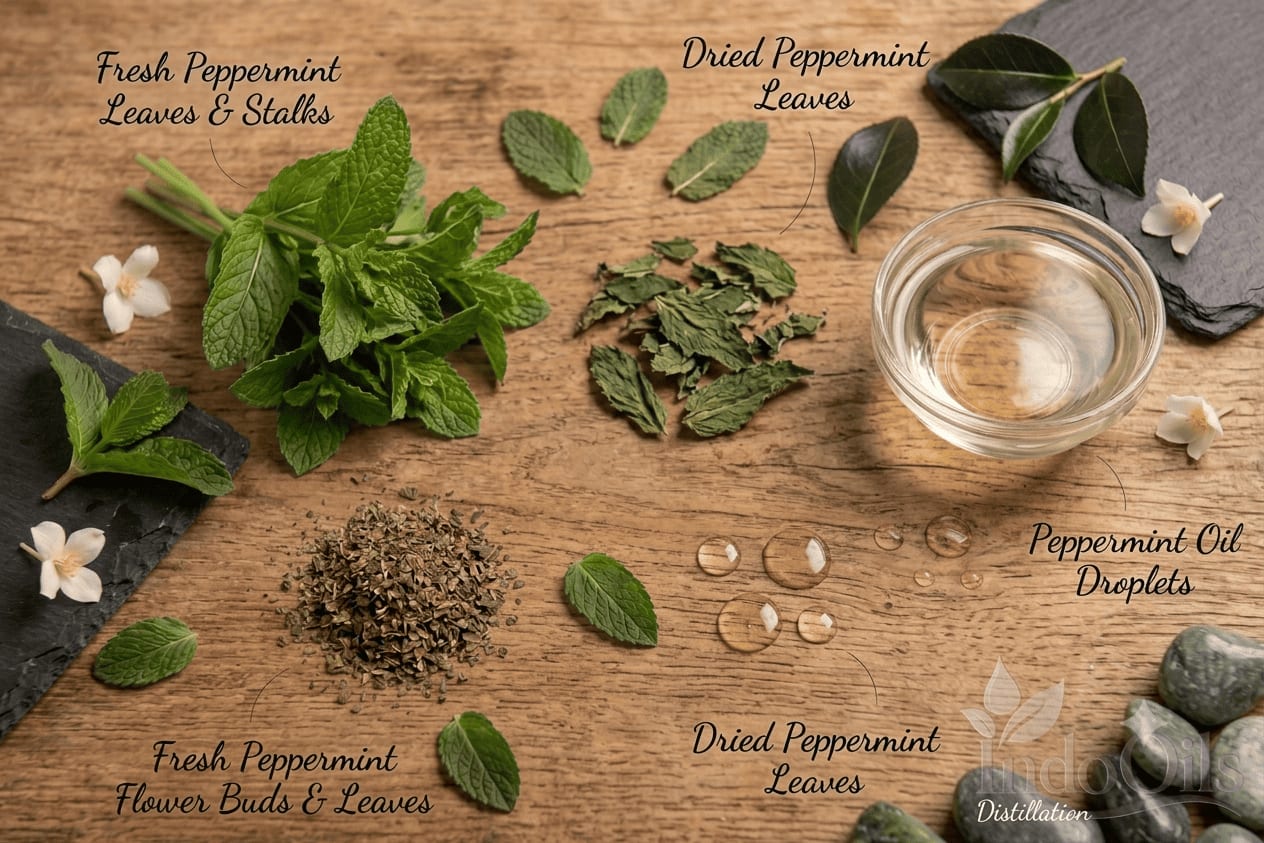
- Peppermint oil (Mentha piperita) has a clean, sharp and cooling profile, led by menthol and menthone. It is the reference mint for premium oral care, confectionery and fine personal care.
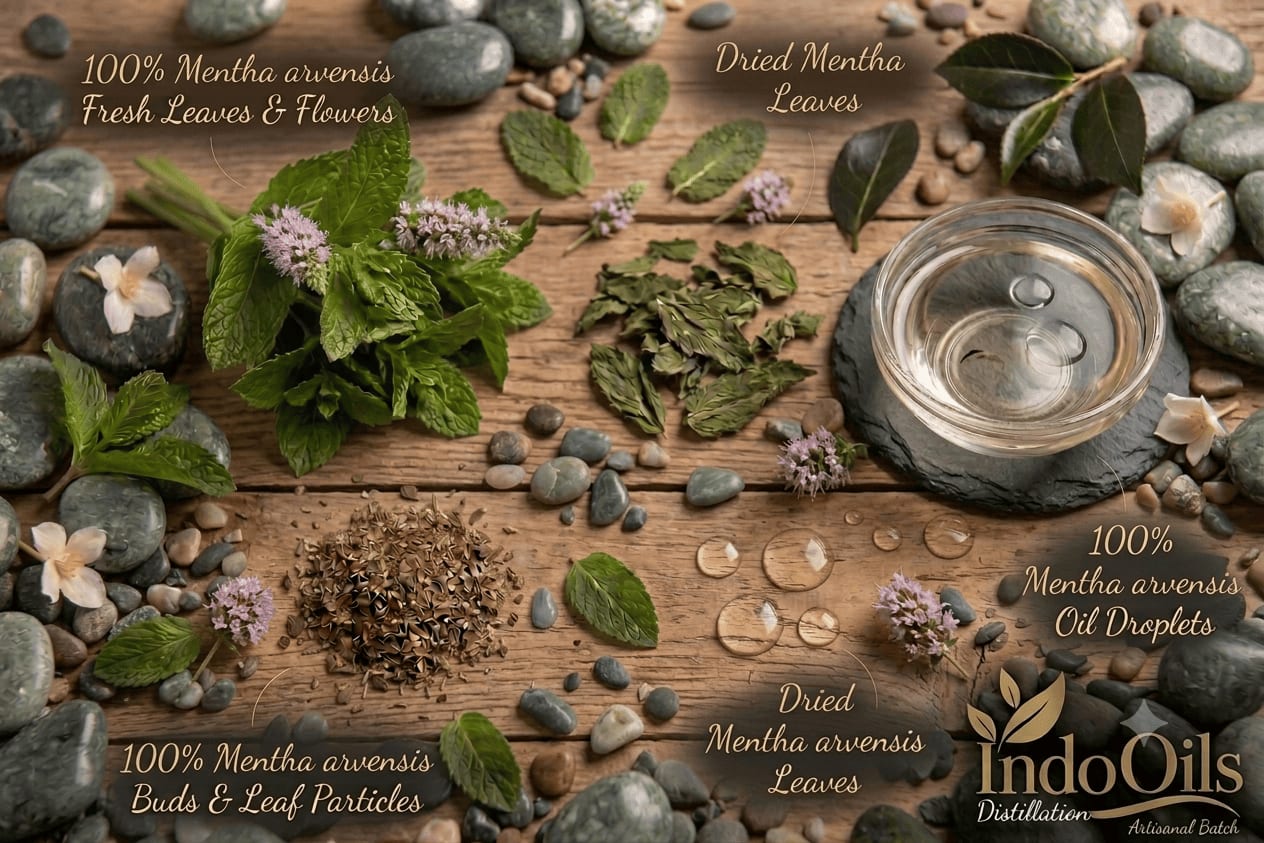
- Mentha arvensis oil, also called cornmint oil (Mentha arvensis), is naturally richer in menthol and stronger and more rustic in character. It is the main raw material for natural menthol crystals and dementholised mint oil, and a cost-effective mint for balms, soaps and household products.
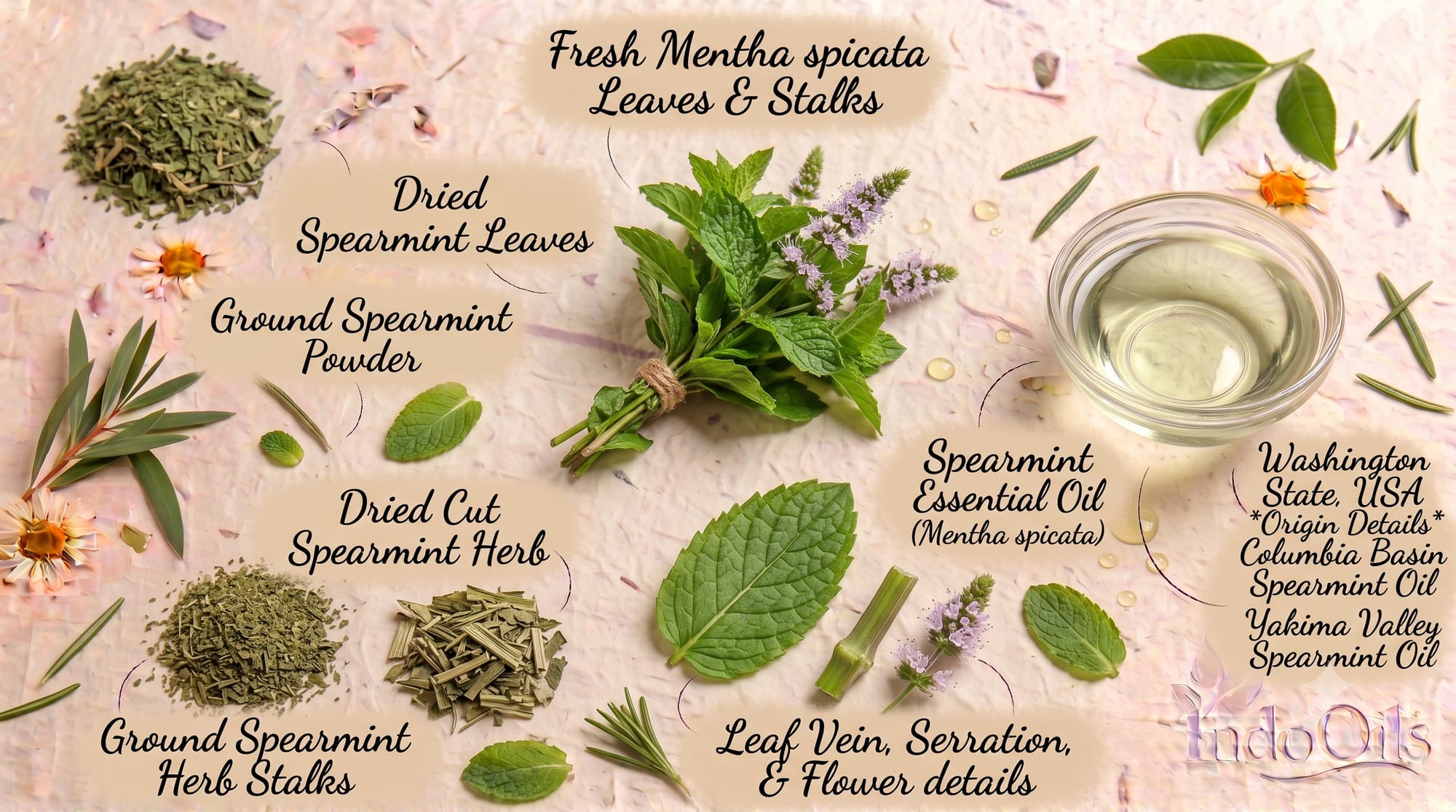
- Spearmint oil (Mentha spicata) is led by carvone rather than menthol, so it smells sweet and fresh without strong cooling. It is the classic mint for chewing gum and milder toothpaste.
Where Indian mint oil comes from
Most of India's mint oil comes from Uttar Pradesh, where farmers plant mint in late winter and distil the crop in late spring and early summer. The size and quality of each season's oil depend on rainfall, temperature and the area planted, so prices can move noticeably between seasons.
Experienced importers plan ahead. They agree quantities for the year, buy part of their volume soon after distillation, and keep a reference sample of each approved lot so that future deliveries can be matched against it.
What to check on the test report
Ask for a Certificate of Analysis (COA) for the actual lot you are buying, not a generic specification. For mint oils, it usually covers:
- Appearance, colour and odour compared with a standard.
- Physical constants: specific gravity, refractive index and optical rotation, which quickly reveal dilution or the wrong species.
- Composition by gas chromatography: menthol and menthone for peppermint and arvensis, and carvone for spearmint.
- Purity: confirmation that the oil is free from added solvents, carrier oils and synthetic menthol where natural oil is specified.
Documents your compliance team will ask for
Regulations differ by market, and the importer usually carries the registration responsibility. Before you order, check what applies to your use:
- USA: the FDA rules for food flavourings, or the cosmetic facility registration and product listing introduced by the Modernization of Cosmetics Regulation Act (MoCRA).
- EU and UK: REACH or UK REACH registration for imports of one tonne or more a year, and allergen labelling under the cosmetics regulations.
- South Korea: ingredient names and safety standards set by the Ministry of Food and Drug Safety (MFDS).
- Australia and New Zealand: introduction rules under AICIS and the New Zealand EPA.
At a minimum, every bulk shipment should come with a COA and an MSDS. Many buyers also ask for the INCI name and CAS number for their ingredient files: for example, Mentha Piperita (Peppermint) Oil, CAS 8006-90-4.
What moves the price of mint oil
- The size of the Indian crop, driven by weather and the area farmers choose to plant.
- Demand for natural menthol, which pulls Mentha arvensis prices up or down.
- Competition from synthetic menthol, which sets a ceiling for some uses.
- Currency and freight, which change the landed cost in your market.
Buying direct from an Indian producer removes trading margins, and a stable supplier relationship helps you plan through price swings.
Why buyers choose IndoOils
- Genuine, traceable product: every lot is lab-tested, and a Certificate of Analysis (COA) and MSDS travel with every shipment.
- Certified manufacturing: ISO 9001:2015 and GMP certified, HACCP, Halal and Kosher, and registered with India's DGFT as an exporter.
- Competitive pricing: you buy direct from an Indian manufacturer and exporter, with no trading layers in between.
- Competitive freight: we quote shipping to your port or door, by sea or air, to the USA, the EU, the UK, Canada, Australia, New Zealand and South Korea.
- Always ready to serve: samples before you commit, and a firm quotation, usually within one business day.
Products in this guide
Related mint products:
- Distillation Peppermint Oil
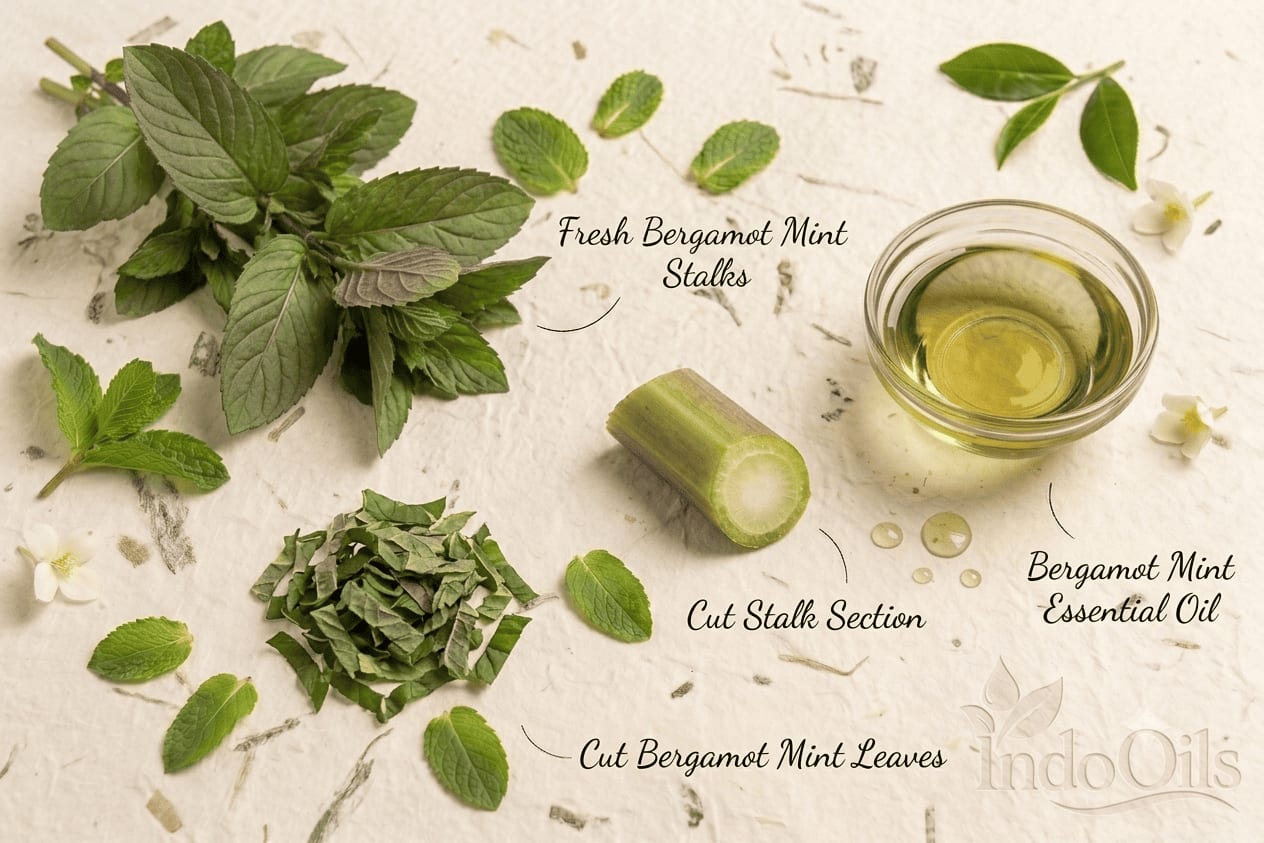
- Bergamot Mint Essential Oil (Mentha citrata), a softer, floral-citrus mint for fragrance and personal care
- Peppermint Floral Water, the hydrosol from peppermint distillation, for toners, mists and rinse-off products
- The full peppermint products range
To get a price, request a bulk quotation with the product, quantity, packaging and destination. To evaluate a lot first, request a sample.
Buying in bulk?
20 kg and 50 kg packs, with a certificate of analysis for every lot.
Tell us the product, quantity and destination, and we will come back with a quotation.