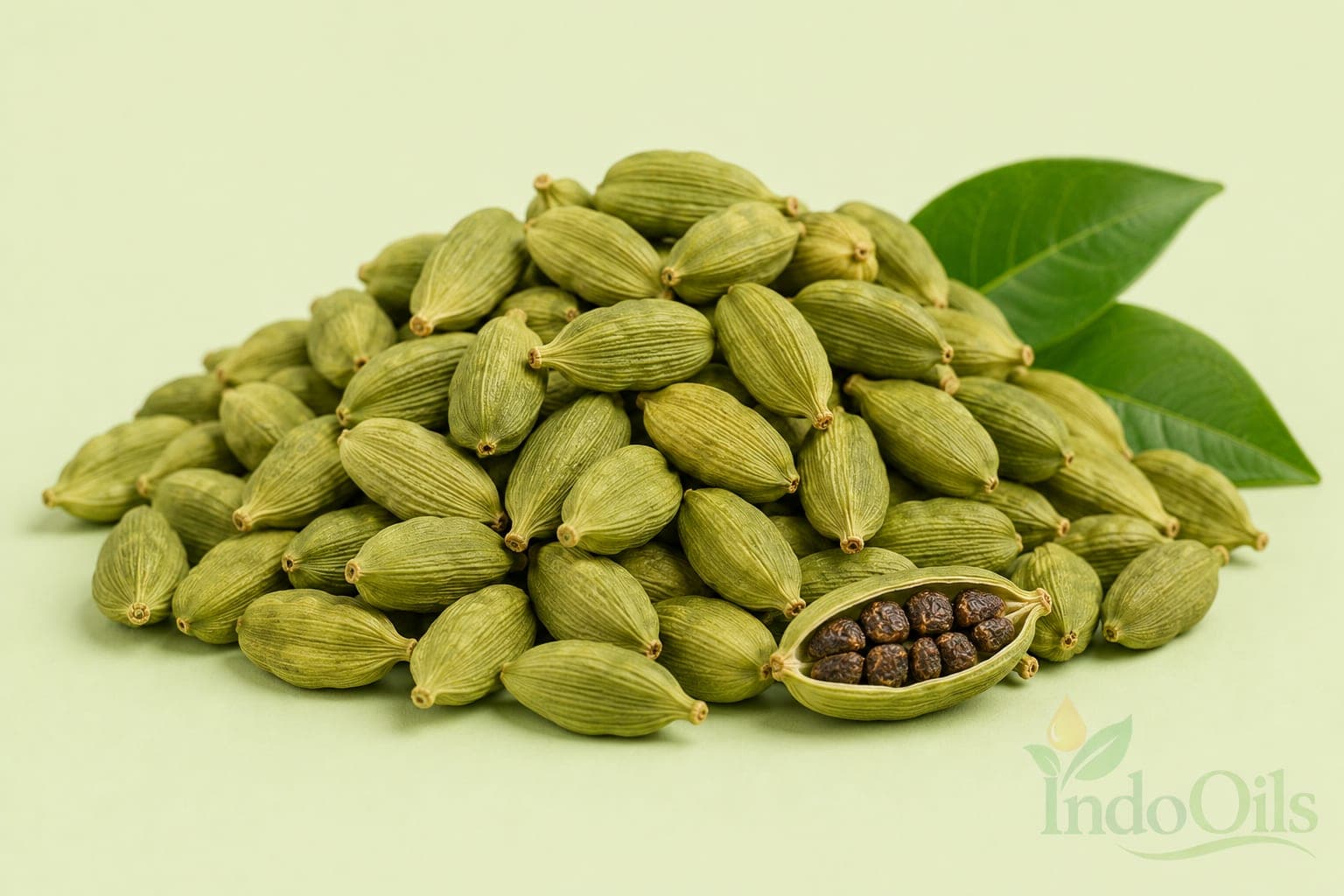
Green cardamom (Elettaria cardamomum) is often called the "Queen of Spices", and it is one of the few major spices whose wild home is India. The plant is native to the evergreen forests of the Western Ghats. Kerala's hill districts, Idukki above all, remain the centre of Indian production, with Karnataka and Tamil Nadu close behind.
Guatemala has overtaken India as the largest exporter of whole pods, but India is still a leading producer and the world's biggest consumer. It also has a mature processing industry that turns pods into oils and extracts for flavour, fragrance and personal-care buyers. Graded lots are traded through the Spices Board's e-auctions at Puttady (Kerala) and Bodinayakanur (Tamil Nadu), which gives Indian cardamom a clear, documented supply chain.
This guide covers the three cardamom products in IndoOils' range: the essential oil, the CO₂ spice oil and the oleoresin. It explains what separates them, which specifications matter, and how to buy them in bulk.
Three Cardamom Extracts, Three Different Jobs
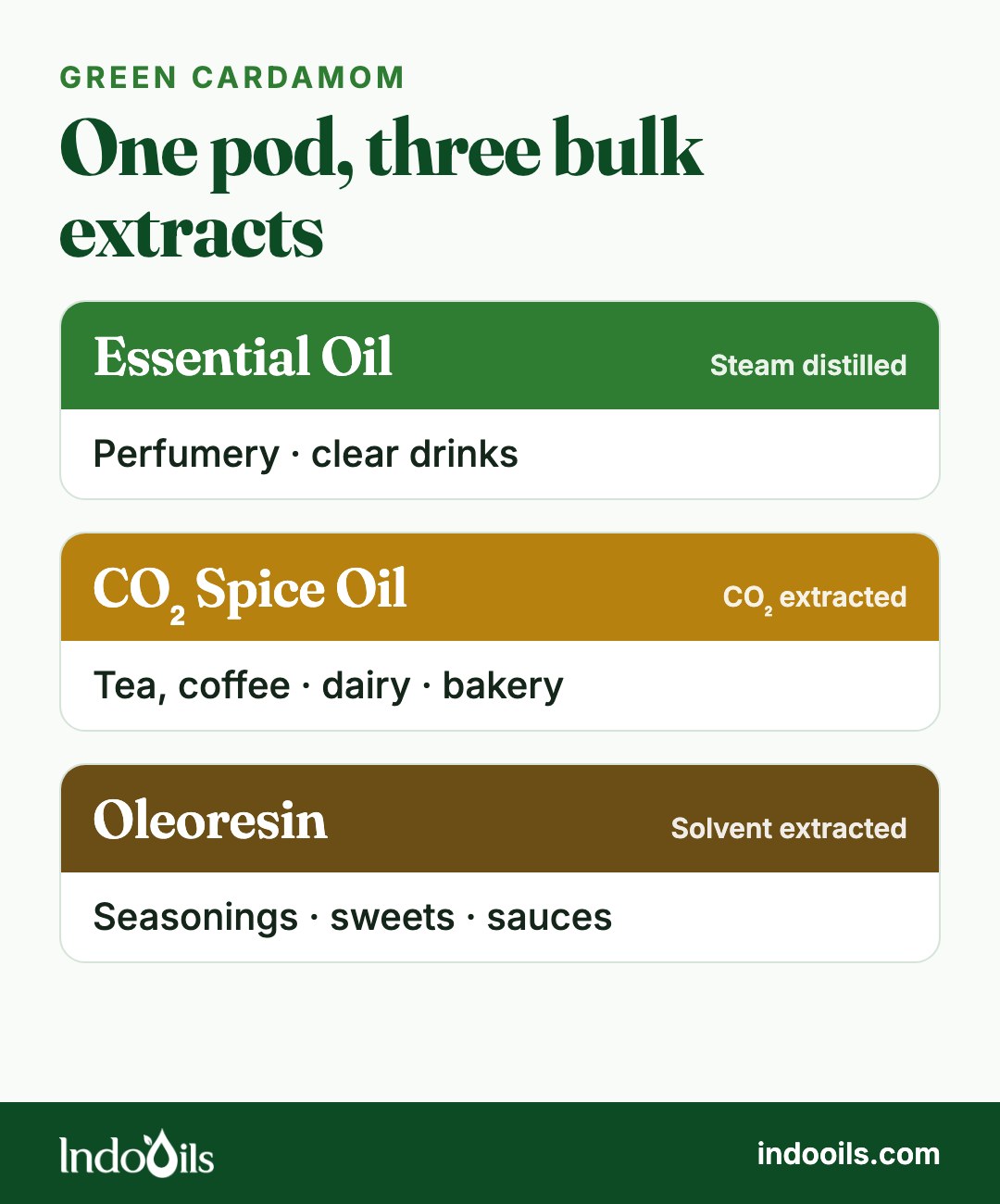
All three start from the same dried green pods, and all three carry CAS 8000-66-6. They are made differently, though, and they behave differently in a formula. Choosing the wrong one is the most common reason a cardamom flavour or fragrance trial "doesn't taste like cardamom".
Cardamom Essential Oil
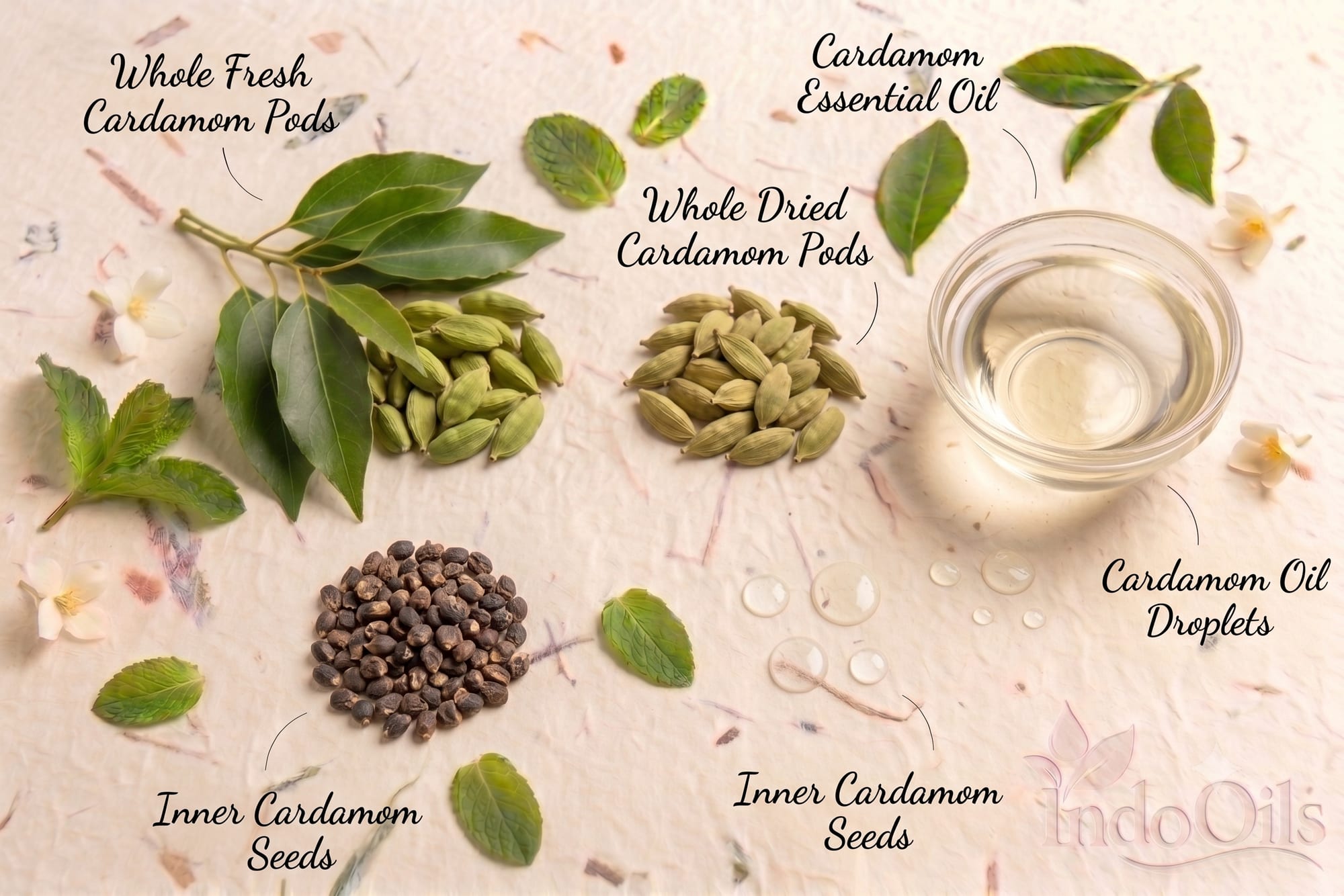
Cardamom Essential Oil is distilled from the crushed seeds inside the pod. The seeds typically yield around 4–9 % volatile oil, depending on variety and crop. The oil is colourless to pale yellow, with a sweet, spicy, slightly camphoraceous top note that is unmistakably cardamom. It is clear and thin, mixes easily with alcohol and other essential oils, and is the default choice for perfumery, personal care and clear beverages.
- Botanical name: Elettaria cardamomum
- INCI name: Elettaria Cardamomum Seed Oil
- CAS number: 8000-66-6
- SKU: INDO-0003
- Plant part: Seeds (from dried pods)
- Origin: India
- Shelf life: 36 months, unopened
Cardamom CO₂ Spice Oil
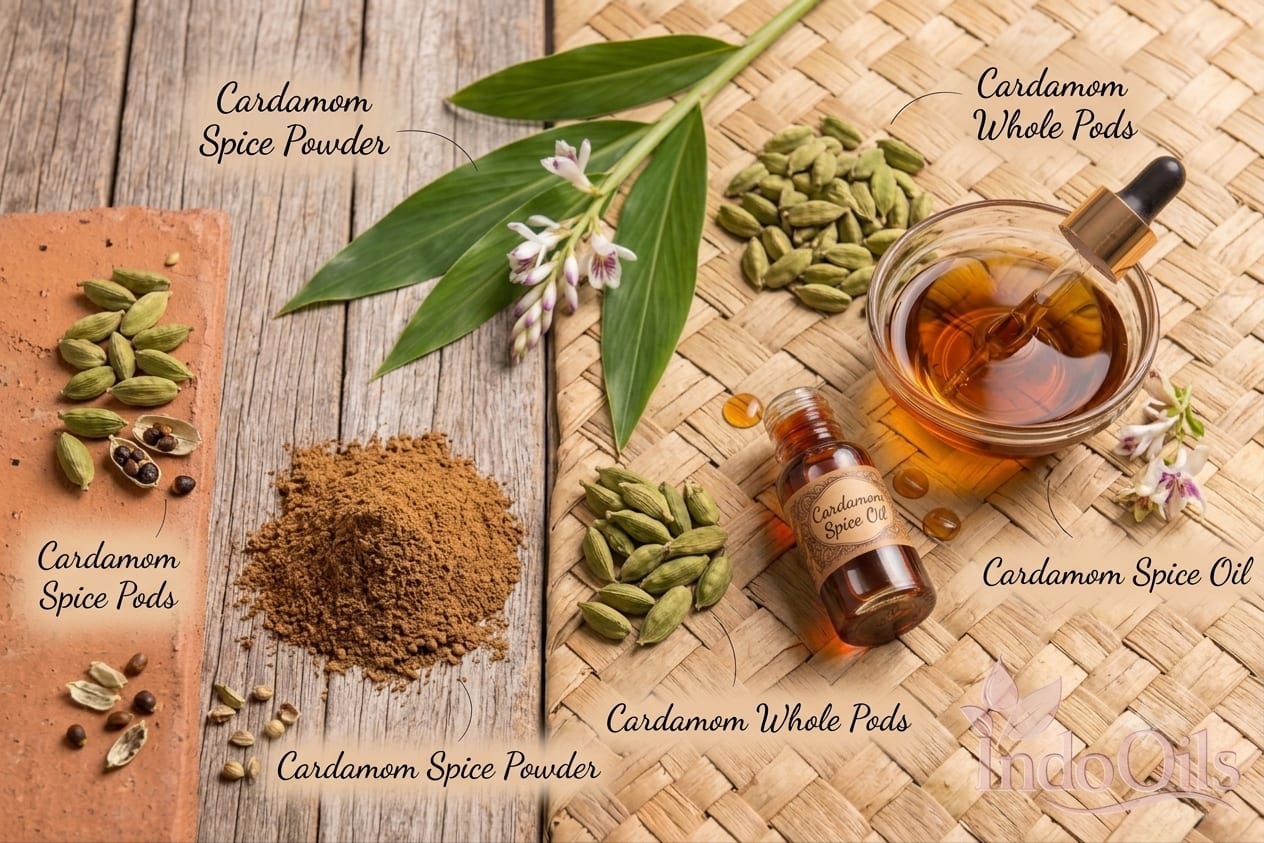
Cardamom Spice Oil is extracted with supercritical CO₂ at low temperature instead of steam. Because no heat or water is involved, the extract keeps more of the fresh, rounded "just-cracked pod" character. Many food technologists prefer it for premium tea blends, dairy and bakery, where steam-distilled oil can taste a little sharp. Its aroma is warm, spicy-sweet and balsamic. It is soluble in oils and alcohol and insoluble in water.
- INCI name: Elettaria Cardamomum Seed Oil
- CAS number: 8000-66-6
- HSN code: 33012990
- SKU: INDO-542
- Extraction method: Supercritical CO₂
- Purity: 99.5 %
- Category: Spice oils
Cardamom Oleoresin
Cardamom Oleoresin is a viscous, brownish-green, solvent-extracted concentrate. It holds the volatile oil plus the heavier, non-volatile flavour fraction of the spice. It is designed for food: one small dose replaces ground cardamom in seasonings, bakery fillings, sweets and sauces, with much better batch-to-batch consistency and far lower microbial risk than raw spice.
- INCI name: Elettaria Cardamomum Seed Extract / Oleoresin
- HSN code: 33019010
- SKU: INDO-652
- Strength: specified by volatile oil content; ask for the percentage on the CoA
Oleoresins have their own buying rules (dispersion on salt or dextrose, solvent residue limits, standardisation). See our spice oleoresins guide for food manufacturers and the full oleoresins range.
What Makes Good Cardamom Oil: The Chemistry
Two constituents define cardamom oil, and they are the first numbers to check on any Certificate of Analysis:
- α-Terpinyl acetate: the sweet, warm, floral-spicy heart of cardamom. The ISO 4733 ranges summarised by EFSA put it at about 30–42 %.
- 1,8-Cineole (eucalyptol): the fresh, camphoraceous lift. The same summary gives about 16–35 %.
The balance between the two is what buyers really taste and smell. A higher terpinyl acetate share reads as richer and sweeter, while a higher cineole share reads as fresher and more medicinal. Oils from different regions sit in slightly different places, so a supplier change can shift the profile even when both oils are "pure".
The remaining 25–40 % is made up of linalool, linalyl acetate, limonene, sabinene, α-terpineol, geraniol and smaller compounds. Several of these (linalool, limonene, geraniol) are listed fragrance allergens in the EU. See fragrance allergen labelling: the documentation buyers need.
Warning signs on a GC report include an unusually high cineole figure (possible cut with eucalyptus oil), synthetic terpinyl acetate (an odd isotope or impurity profile), or a flat, low-ester profile from old or poorly stored pods.
Where Bulk Buyers Use Cardamom Oil
Food and beverage
- Tea, chai premixes and coffee: India's masala chai and the Gulf's gahwa (Arabic coffee) are two of the best-known traditional uses of cardamom. The oils are used to flavour instant premixes, iced teas and ready-to-drink coffee.
- Dairy and desserts: ice cream, kulfi, flavoured milk, shrikhand and yoghurt.
- Bakery and confectionery: Nordic cardamom buns, biscuits, cakes, chocolates and Indian sweets.
- Beverages and spirits: gin botanicals, liqueurs, bitters and cola-type flavours.
- Mouth fresheners: mukhwas, pan masala and breath-freshening confectionery.
Cardamom is on the US list of essential oils that are generally recognised as safe for food use (21 CFR 182.20). For India, ask for food-grade documentation that matches your FSSAI requirements. More on our food and beverage page.
Fragrance and personal care
- Fine fragrance: a classic spicy top and heart note in men's colognes, oriental/amber accords and modern gourmand perfumes. It pairs especially well with citrus, rose and woods.
- Soaps, shower gels and shaving products: clean, warm-spicy character that works in both masculine and unisex lines.
- Oral care: toothpaste and mouthwash flavours, usually alongside mint.
Cosmetic and personal-care brands can find more on our cosmetics and personal care page.
Home fragrance and aroma
Candles, reed diffusers and room sprays use cardamom for its "warm kitchen" effect, especially in autumn and festive collections. See home care and fragrance and aromatherapy and wellness.
Blending Partners
Cardamom rarely works alone. These pairings are the backbone of most spice flavours and warm fragrance accords, and all of them are available from the same supplier as your cardamom:
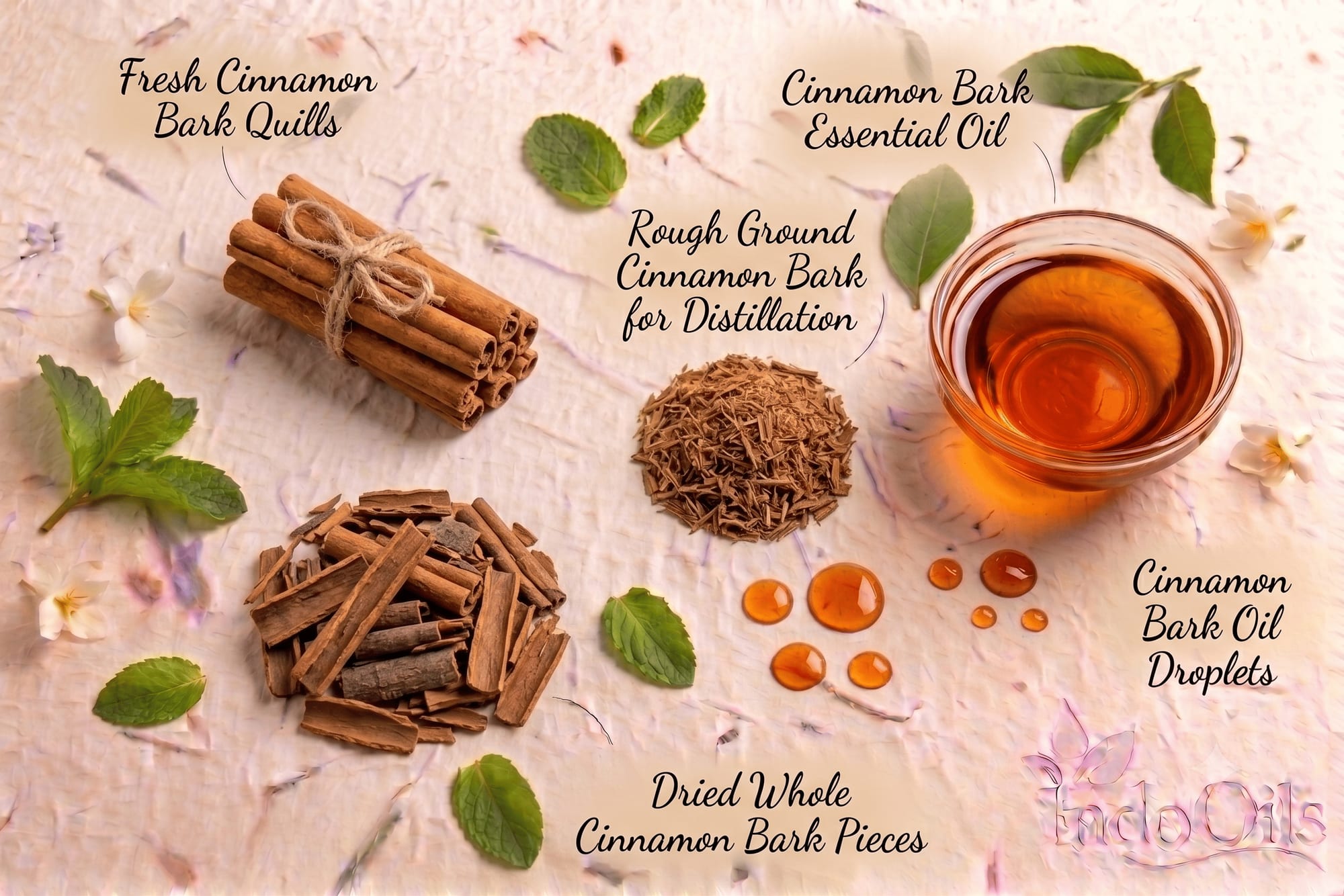
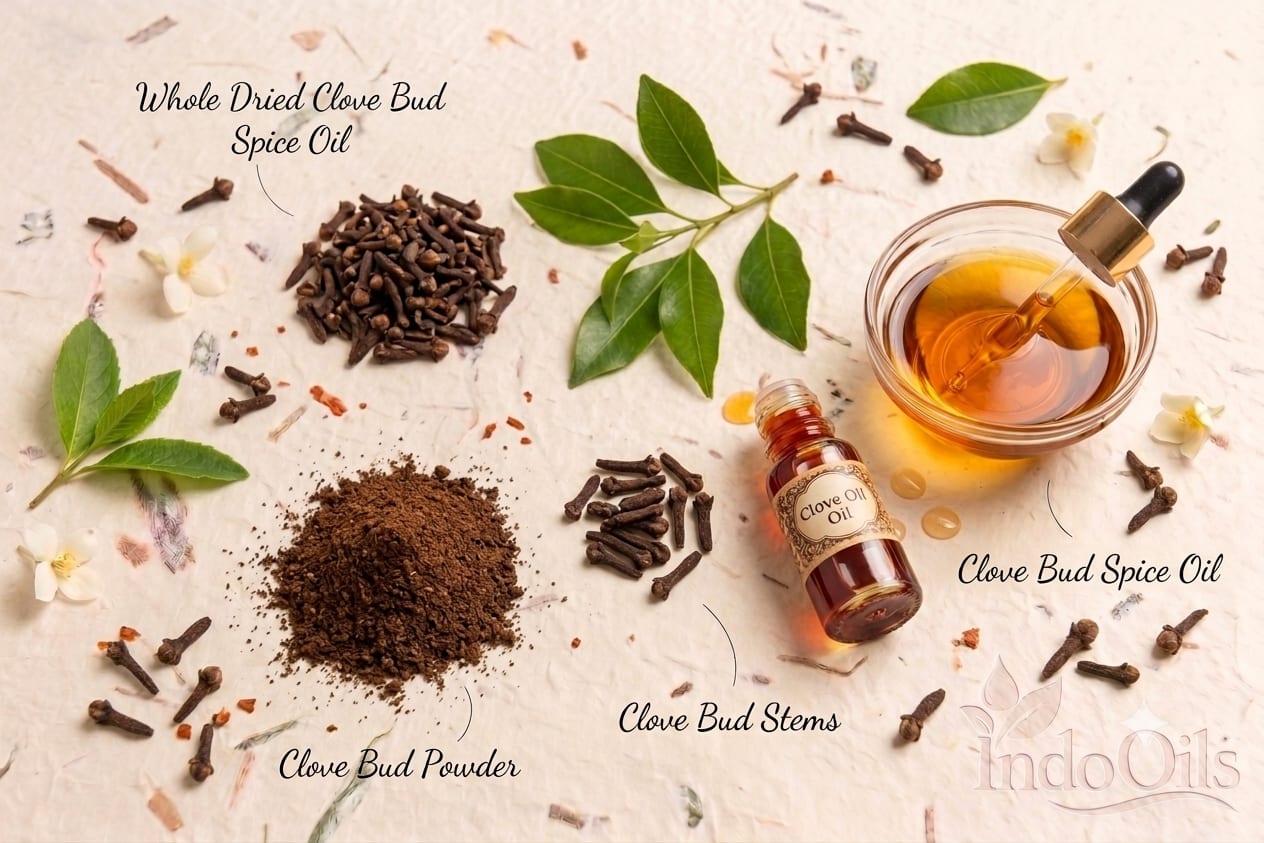
- Chai and warm spice: cinnamon bark, clove bud spice oil, fresh ginger and black pepper spice oil
- Bakery and gourmand: nutmeg, coriander seed and sweet orange
- Fine fragrance: Calabrian bergamot, Bulgarian rose and sandalwood
Building a ready-to-use blend, such as a chai flavour or a spiced home-fragrance oil? Our custom formulation team can match a target profile so you buy one standardised blend instead of five separate oils.
Quality Checks and Documents to Request
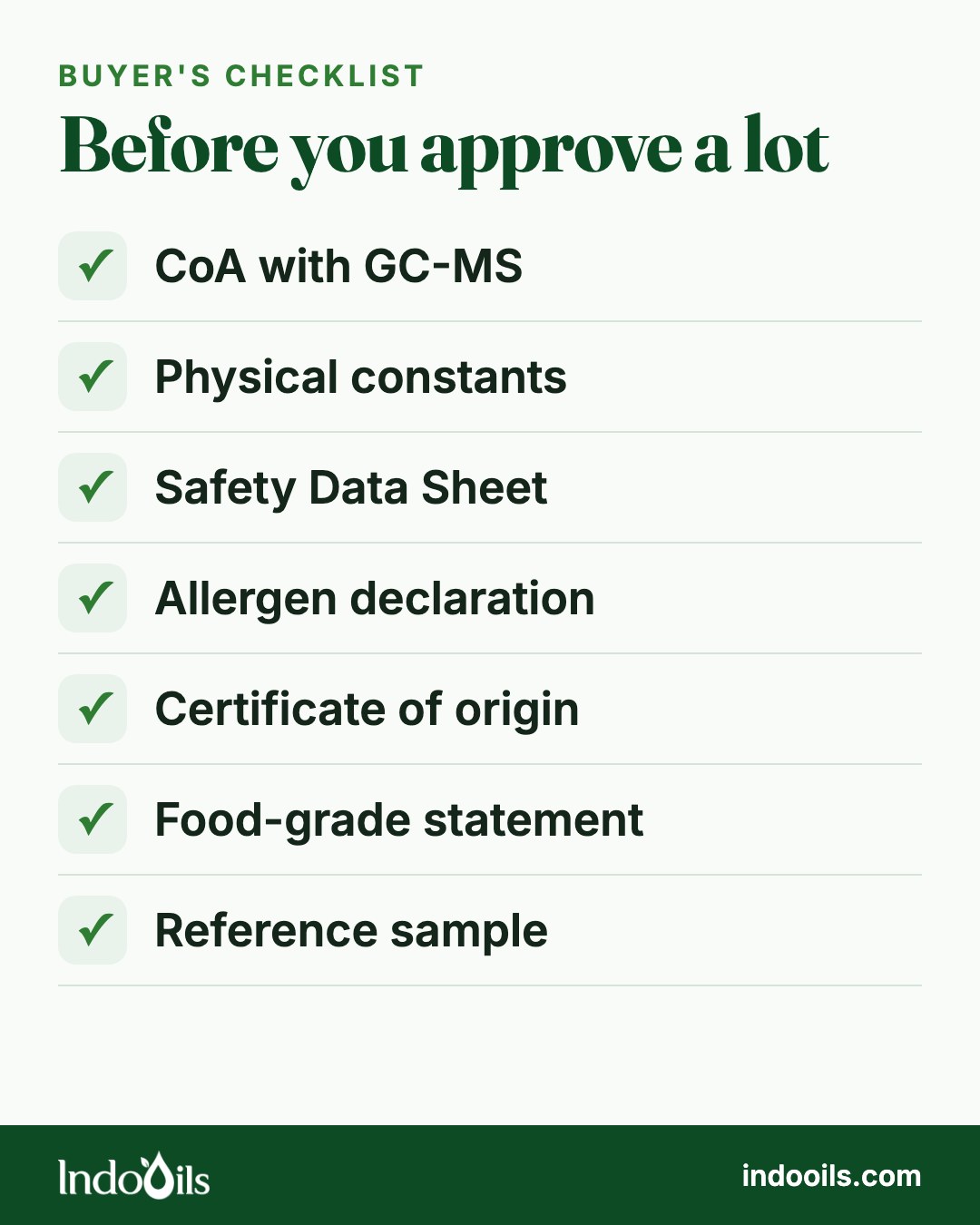
Before approving a bulk lot, ask for:
- Certificate of Analysis (CoA) with a GC-MS breakdown showing α-terpinyl acetate, 1,8-cineole and linalool, plus specific gravity, refractive index and optical rotation. Agree the acceptance ranges in writing before the first order.
- Safety Data Sheet (SDS), needed for transport and for import into the EU, UK, US and most other markets.
- Fragrance allergen declaration for cosmetic use (EU Regulation 2023/1545 expanded list).
- Certificate of origin for customs and for "Indian cardamom" label claims.
- Food-grade statement and residue information when the oil goes into food or beverages.
- Batch retention and traceability so a complaint can be traced back to the lot. See how this works on our traceability and quality assurance pages.
Standard templates are on the downloads page, and current company certifications are listed under certifications. For the wider picture on documentation, see clean-label traceability: what 2026 sourcing teams expect.
Supply and Seasonality
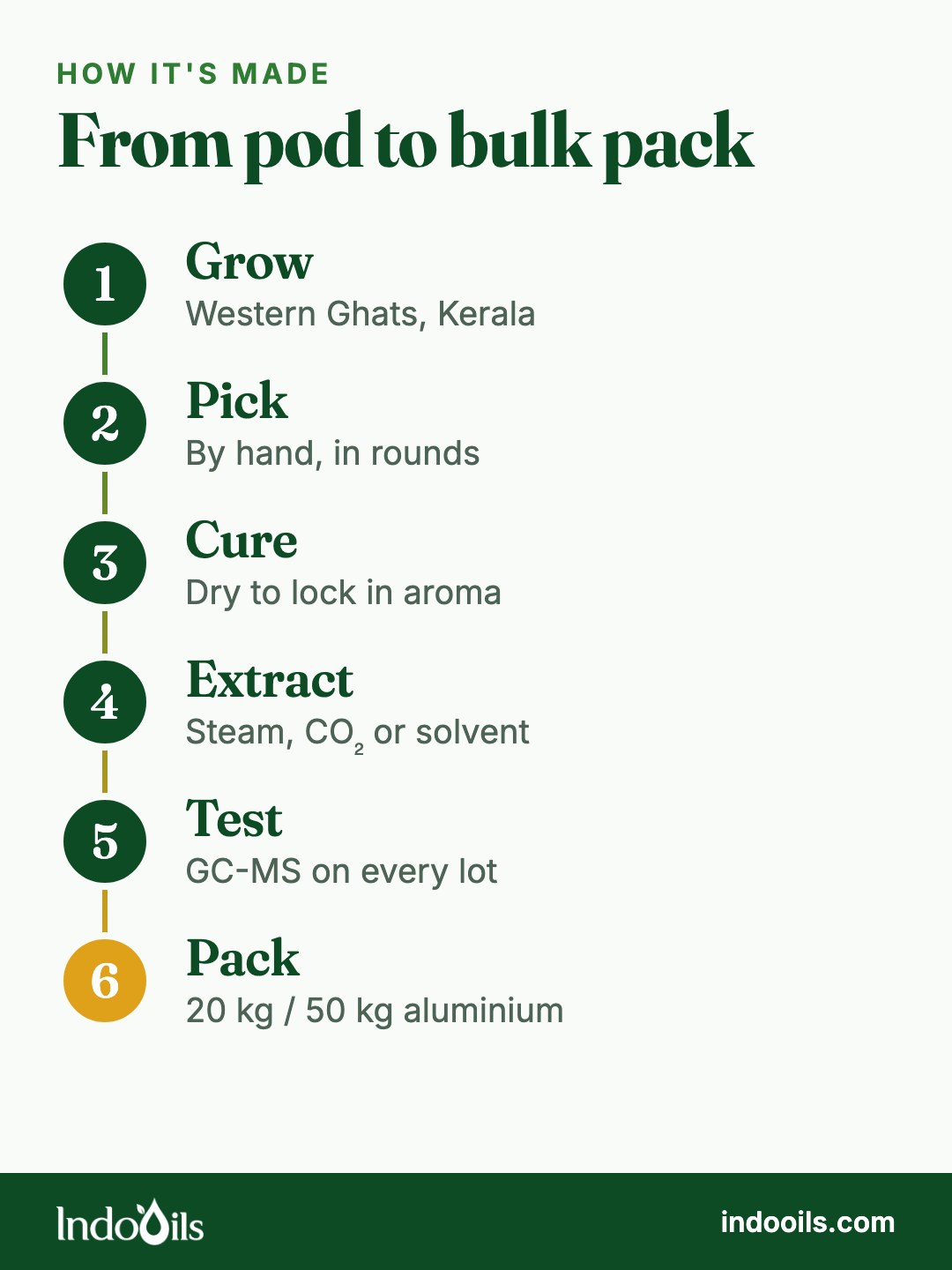
Indian small cardamom is picked by hand in several rounds through the main season, as each panicle ripens. That makes it labour-intensive and sensitive to monsoon rainfall and summer heat in the Idukki hills. Pod prices at the Spices Board auctions can move sharply from one season to the next, and oil prices follow.
For steady supply:
- Book annual or half-yearly volumes rather than buying spot, so the supplier can secure material across the season.
- Approve a reference sample and keep it, so every later lot is judged against the same standard.
- Avoid single-shipment dependency for launch products; plan one pack of buffer stock.
Our climate volatility and wholesale pricing 2026 article explains how weather is reshaping botanical supply in more detail.
Storage and Handling
- Store at 15–25 °C in a dry place away from direct sunlight.
- Keep containers tightly closed. Cardamom oil's esters and terpenes oxidise and lose their sweetness on prolonged exposure to air.
- Use the aluminium containers as supplied. For part-used packs, top up the headspace with nitrogen if possible.
- Keep oleoresin well sealed and warm it gently and evenly before dispensing, as it thickens in the cold.
- Shelf life is 36 months unopened. Once opened, use within about 12 months for best flavour.
- Cardamom oil is flammable; keep it away from heat and open flame.
How to Order Cardamom Oil in Bulk
All three cardamom products ship from India in 20 kg and 50 kg aluminium packs, with a minimum order of one pack. Pricing is quoted on request and depends on the product, volume, destination and contract length.
- Request a quotation: send a bulk inquiry naming the product (essential oil, CO₂ spice oil or oleoresin), your application and the annual volume you expect.
- Try before you commit: request a sample with its CoA for lab and sensory approval.
- Launching your own brand? Our private label service covers filling, labelling and export documentation. See the private-label guide for brand owners.
Export shipments include a commercial invoice, packing list and certificate of origin as standard.
Frequently Asked Questions
Which cardamom extract should I choose for chai or coffee premixes?
For a fresh, rounded "real pod" taste, start with the CO₂ spice oil. If your premix needs the full spice body (and some colour is acceptable), use the oleoresin. The steam-distilled essential oil suits clear drinks and fragrance work best.
Is cardamom oil the same as black cardamom oil?
No. Green cardamom (Elettaria cardamomum) is sweet and floral-spicy. Black or large cardamom (Amomum subulatum) is smoky and camphoraceous, with a different composition and different uses. The products in this guide are all green cardamom.
Can cardamom oil be used in food?
Yes, with food-grade documentation. Cardamom is listed in 21 CFR 182.20 in the US, and buyers in India, the EU and the Gulf should ask for the food-grade statement and residue information that their own regulations require.
What is the minimum order?
One 20 kg pack. 50 kg packs are also available, and samples can be sent before a bulk order.
For more Indian-origin buyer's guides, see our posts on vetiver oil, sandalwood oil, basil oil and turmeric oleoresin, or browse the full essential oils range.
Buying in bulk?
20 kg and 50 kg packs, with a certificate of analysis for every lot.
Tell us the product, quantity and destination, and we will come back with a quotation.