Essential oils and herbal extracts are farm products before they are anything else. Over the last few harvest cycles, a monsoon arriving a few weeks late, a heatwave during flowering or a dry spell before harvest has been enough to change both how much oil comes off the still and what that oil contains.
For bulk buyers in the USA, Europe, the UK, the Middle East and Asia, that means price movements that used to last a season can now shape a whole year of contracts. This guide explains why, shows when the main Indian crops are harvested, and sets out how experienced buyers keep their costs and supply steady.
Why weather hits essential oils harder than other inputs
With most industrial raw materials, a supply shock changes the price and nothing else. With botanical oils, weather changes three things at once:
- Volume. Less rain or extreme heat means less plant material, and often a lower oil yield from each tonne distilled.
- Composition. The balance of key compounds shifts with growing conditions. Menthol in mint oil, curcuminoids in turmeric and the alcohols in vetiver can all move from one harvest to the next.
- Timing. A late season delays fresh oil, so old stock has to stretch further, and buyers start competing for it.
The second point is the one buyers underestimate. When the oil that is available sits at the edge of a specification, it may need blending or extra testing before it meets the same spec as last year. That adds cost on top of simple supply and demand.
The crops most sensitive to weather
Some oils come from crops harvested once a year in a short window, and these feel the weather most. Others come from plants that can be cut several times a year, or from wood and resin, and are much steadier.
- Mint oils. Mentha arvensis is planted in early spring and cut in early summer across northern India. A hot, dry spring or a poor pre-monsoon season shows up quickly in both volume and menthol content. Our peppermint buyer's guide covers this crop in depth.
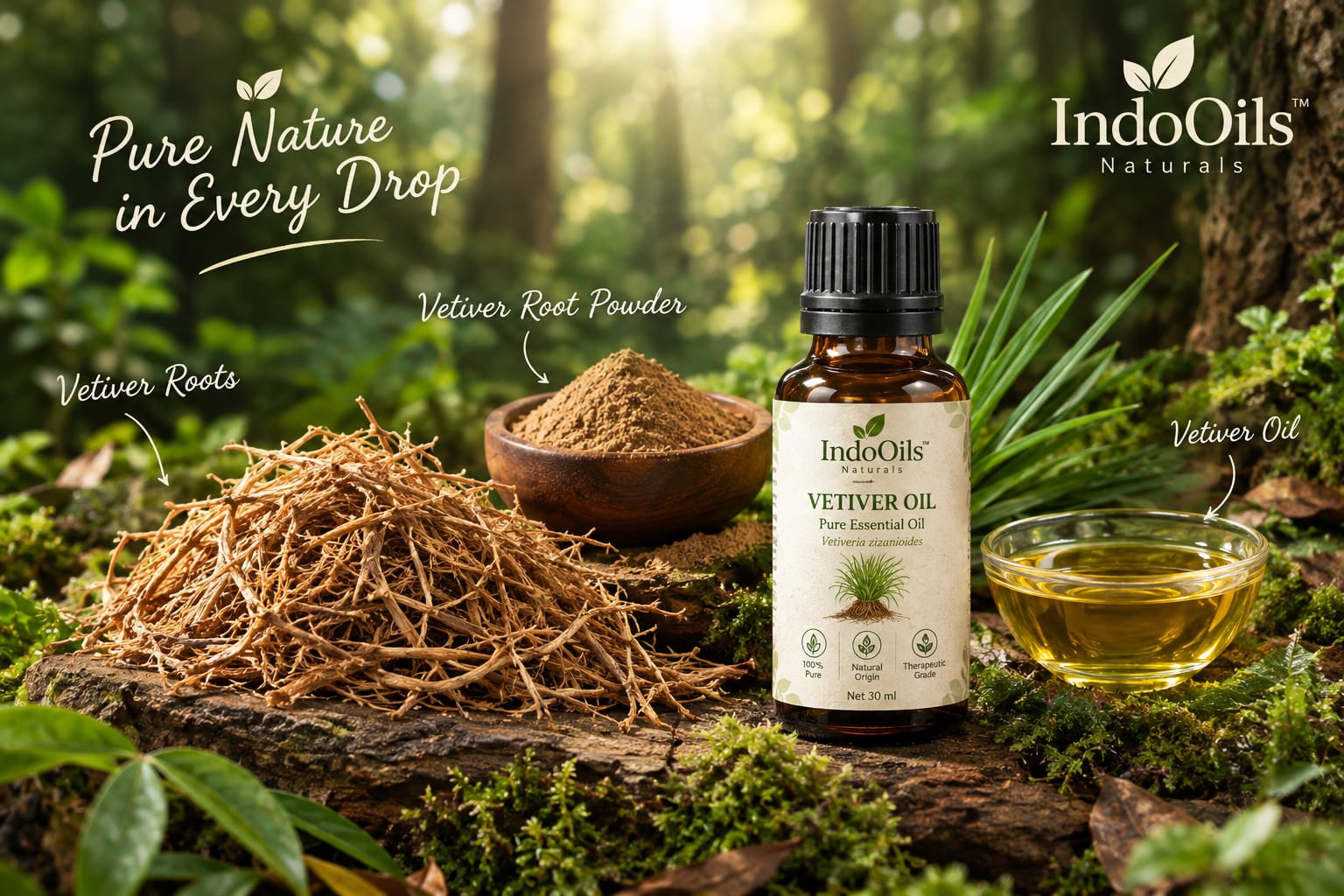
- Vetiver. Vetiver oil is distilled from roots that grow for a year or more. Waterlogging or drought during that time affects root yield, and a short supply year cannot be made up quickly. See our vetiver buyer's guide.
- Rhizome and spice crops. Turmeric, ginger, black pepper and chilli are each harvested once a year. Their oils and oleoresins follow the crop, so a weak harvest affects supply until the next one.
- Flower oils and absolutes. Rose, jasmine and other flowers bloom for a few weeks a year. Rain or heat during that short window has an outsized effect on what can be produced.
When the main Indian crops are harvested
Knowing the harvest window tells you when fresh oil arrives and when supply is tightest. These are typical windows. They vary by region and year, and weather can move them by several weeks.
- Mentha arvensis (mint oil): planted around January to February; main cut around May to June, with a smaller later cut in some areas.
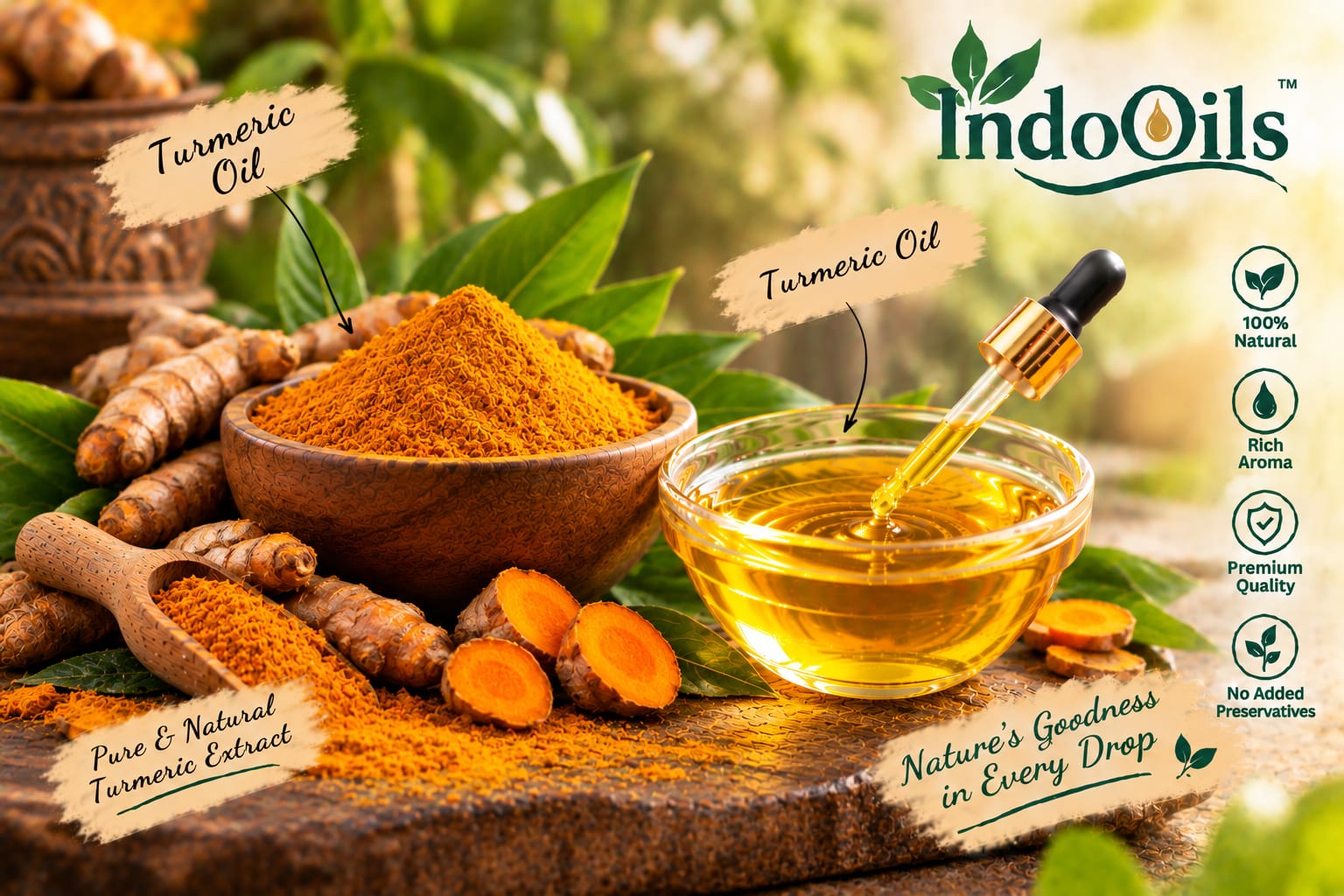
- Turmeric: harvested around January to March. Relevant to Turmeric Oil and Turmeric Oleoresin.
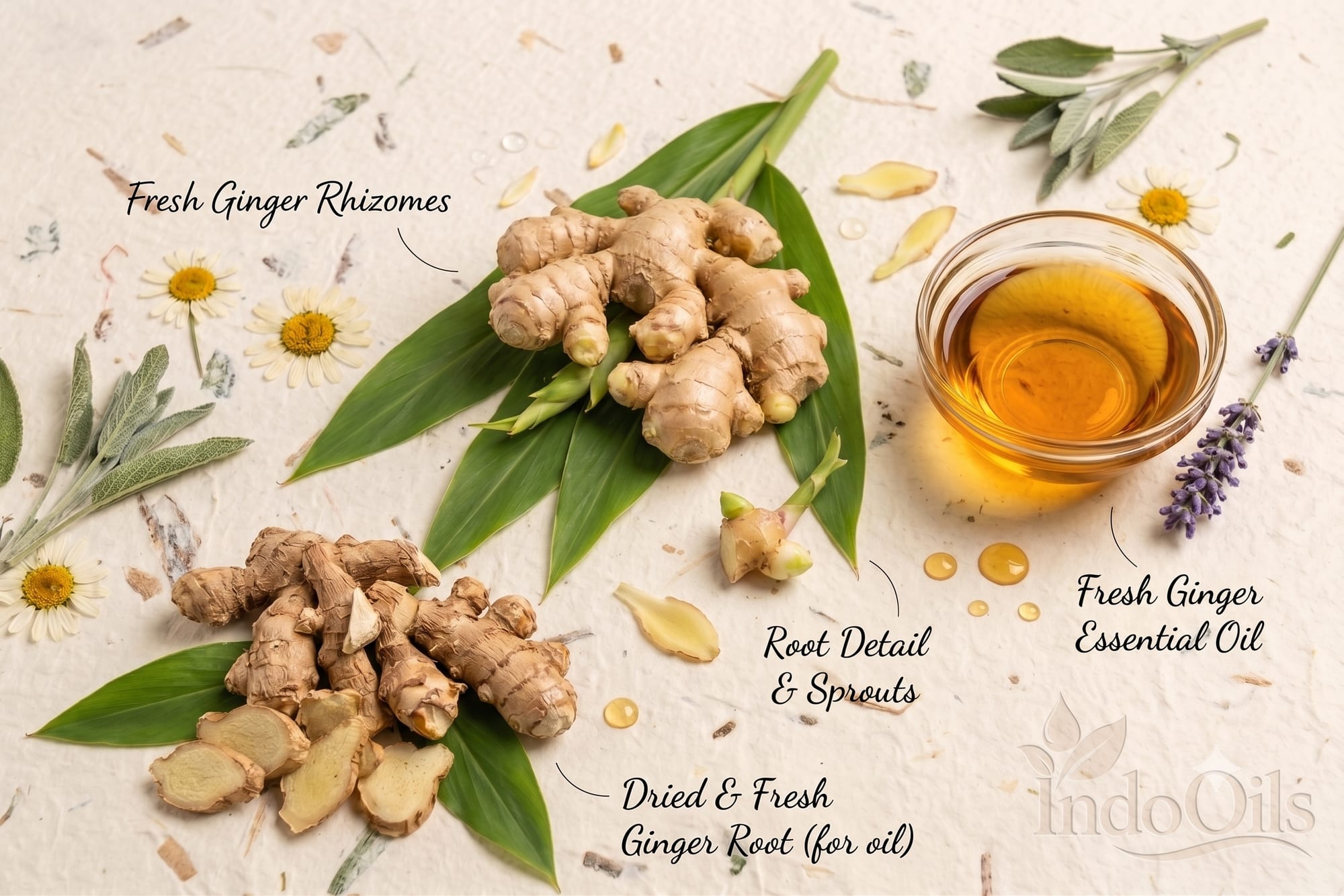
- Ginger: harvested around December to February. Relevant to Ginger Essential Oil and Green Ginger Oleoresin.
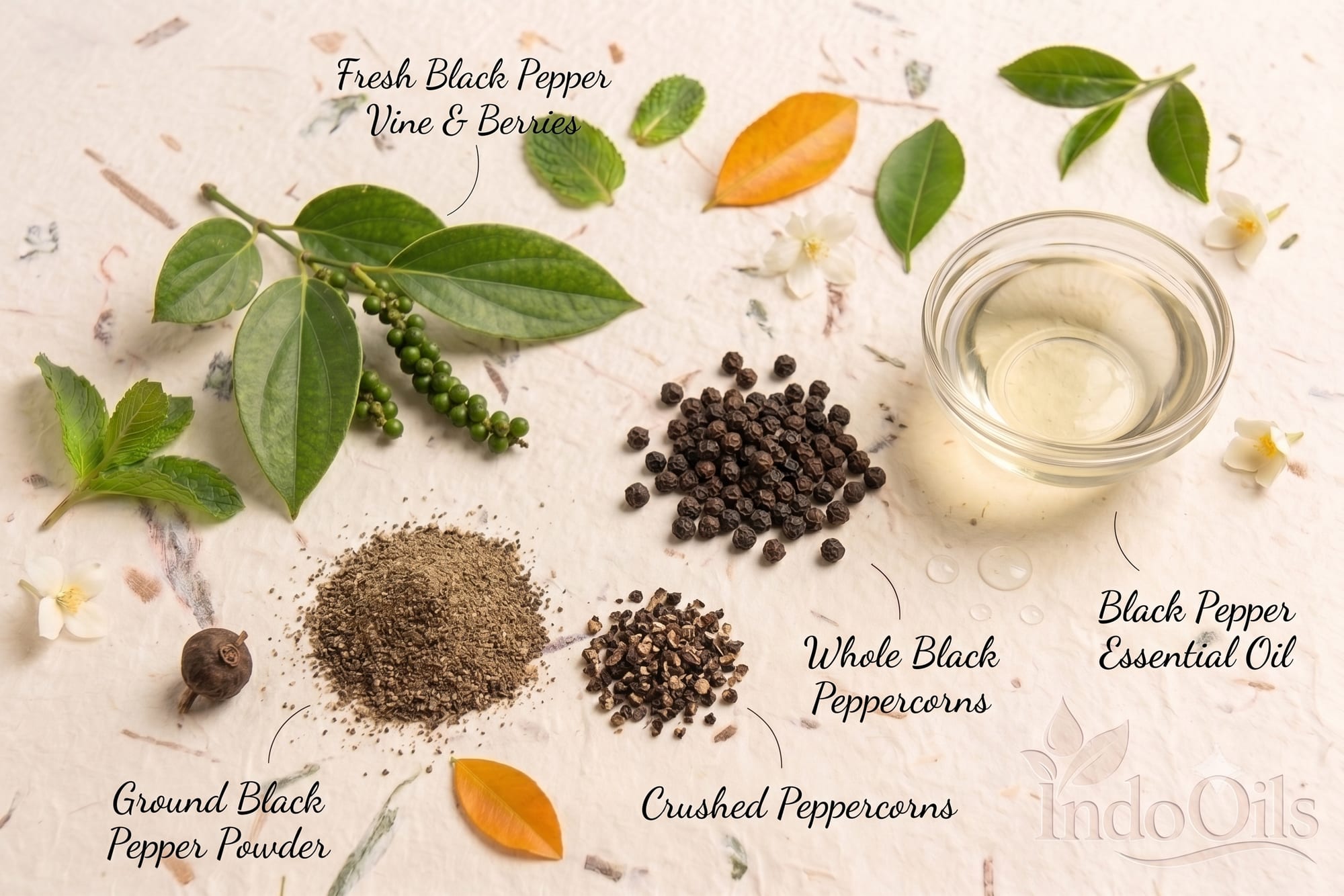
- Black pepper: harvested around December to February in southern India. Relevant to Black Pepper Essential Oil.
- Vetiver: roots usually lifted after 12 to 18 months of growth, mostly in the drier months.
The weeks just before a harvest are usually when supply is tightest and prices are firmest, because last year's stock is running down. The weeks just after a good harvest are usually the best time to secure volume.
What buyers with steadier costs do differently
1. Commit ahead of the harvest, not during it
Buyers who agree volumes for the year ahead of the harvest window, even at a modest premium, are rarely caught by spot-market spikes. Ask your supplier when the next crop arrives and talk volumes before then, not once shortages are already in the news.
2. Split volume across two sources
For your highest-volume products, qualify a second source: a second growing region, a second supplier, or a related grade. One bad harvest then becomes a cost increase, not a stock-out.
3. Build realistic ranges into your specifications
Natural oils vary from harvest to harvest. If your formulation specification is tighter than the chemistry needs, a perfectly good lot may fail, and you are left re-sourcing during a shortage. Where your product allows it, base acceptance ranges on recognised standards such as ISO monographs or your pharmacopoeia, rather than on a single past lot.
4. Approve samples early
Testing and approving a new supplier or a new lot takes time. Do it during calm periods, so that switching or topping up is quick when you need it. A sample request now is cheaper than an emergency qualification later.
5. Hold sensible safety stock of stable oils
Many oils keep well when stored correctly: sealed, full containers, cool and away from light. Holding a few extra months of stock for oils with a long shelf life can bridge a poor harvest. Most of our oils carry a 36-month shelf life in sealed original packaging.
6. Ask for the documents that prove quality
When supply is tight, quality problems become more common, because weak lots are more tempting to blend or stretch. Insist on a certificate of analysis and GC-MS for every lot, check the key compounds against your specification, and keep retained samples. Our quality assurance and traceability pages explain what we provide.
The buyers who get caught out
The buyers who pay the most are the ones who only start looking for supply once a shortage shows up in longer lead times. By the time a shortage is public knowledge, most of the well-priced volume has already been booked by buyers who planned earlier in the cycle.
The answer is not to predict the weather. It is to plan around harvest windows, keep a second option ready, and stay in regular contact with suppliers who can tell you how the current crop is looking.
Plan your next order with us
We supply essential oils, oleoresins and carrier oils in 20 kg and 50 kg packs, with a minimum order of one pack. Every lot ships with a certificate of analysis and a safety data sheet. Many of our documents are on the downloads page.
To plan supply for the year ahead, send us:
Products + expected annual volume + preferred delivery months + application + destination country
We will tell you how the current crops look and suggest the best timing for your orders. Send a bulk inquiry, or browse our essential oils, spice oils and oleoresins. For related reading, see our article on clean-label traceability in 2026.
Buying in bulk?
20 kg and 50 kg packs, with a certificate of analysis for every lot.
Tell us the product, quantity and destination, and we will come back with a quotation.