Vetiver oil is one of the great base notes of perfumery. It is thick, dark and slow to evaporate, with a deep earthy, woody and slightly smoky character that anchors a fragrance and helps it last on skin. In India it is known as khus, and it has been distilled here for centuries, from the attar houses of Kannauj to the cooling khus water and screens of North Indian summers.
For fragrance houses, cosmetic brands and aromatherapy companies in the USA, Europe, the UK and Asia, buying vetiver oil directly from India means closer contact with the source and a clearer view of each lot. This guide explains what bulk buyers should know before they order.
What vetiver oil is
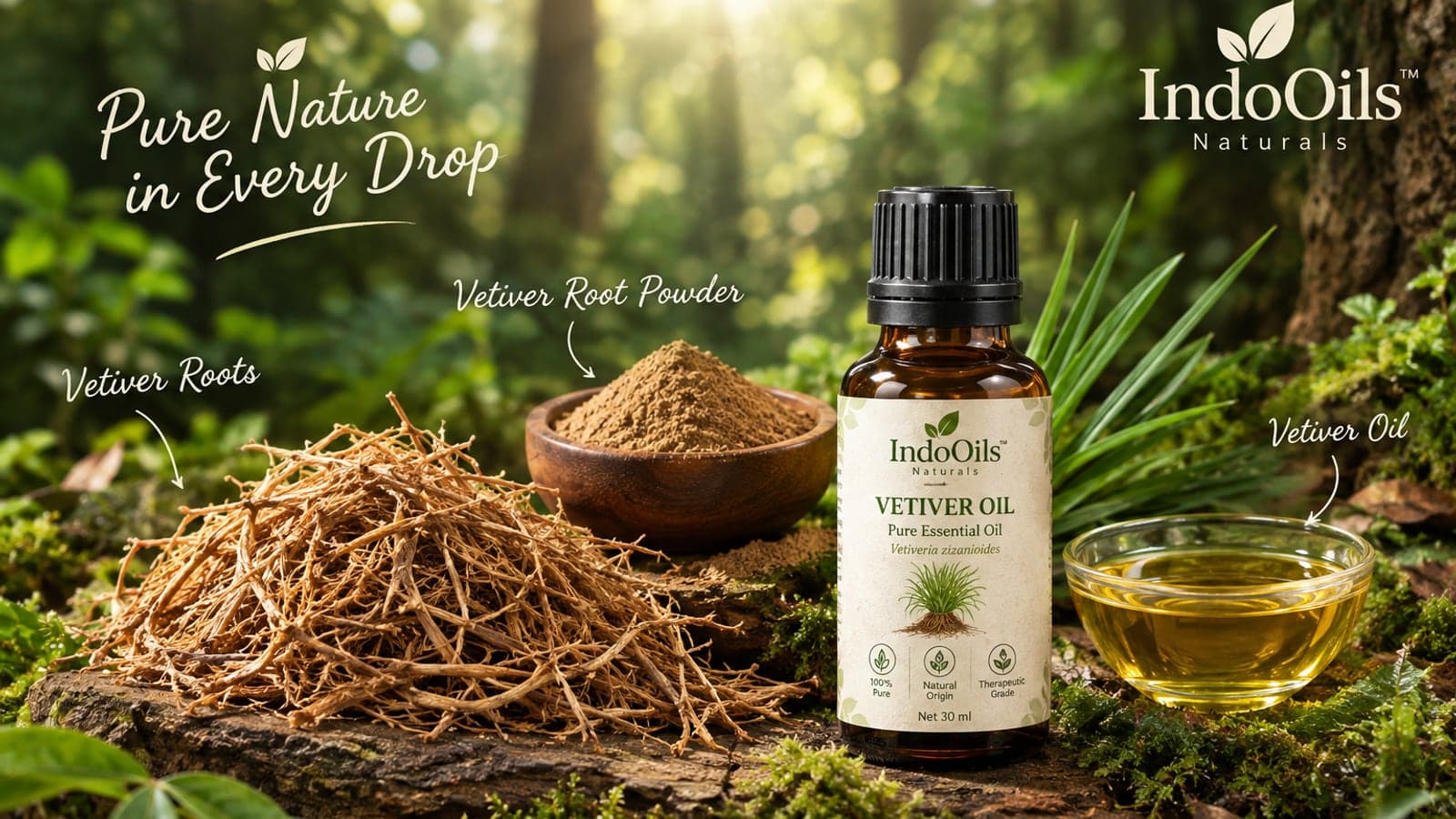
Vetiver (Chrysopogon zizanioides, still widely sold under its older name Vetiveria zizanioides) is a tall, clumping grass. Unlike most aromatic plants, its fragrance is not in the leaves or flowers but in its dense, fibrous roots. The roots are lifted, washed, dried and then steam distilled to produce the oil.
Vetiver is one of the slowest oils to distil. The heavy aromatic compounds come off the roots gradually, so a single distillation can run for many hours, far longer than for most leaf or flower oils. This long distillation, together with the work of harvesting roots, is a large part of why vetiver is a premium ingredient.
Our Vetiver Oil is steam distilled from roots grown in India and is supplied with these identifiers:
- INCI name: Vetiveria Zizanioides Root Oil
- CAS number: 8016-96-4
- HSN code: 33012990
- Appearance: viscous, dark brown liquid
- Odour: deep, earthy, woody, smoky and sweet
- Shelf life: 36 months in sealed original packaging
North Indian and South Indian vetiver
Indian vetiver is not a single quality. Buyers usually come across two broad types:
- North Indian vetiver (khus) comes from wild or traditionally grown vetiver in northern India. It is prized for a rich, earthy, rooty character and is the traditional base for ruh khus, the classic Indian vetiver attar.
- South Indian vetiver comes from cultivated vetiver in the southern states. It is generally smoother and sweeter in odour, with a different chemical profile from the northern oil.
Vetiver is also produced in Haiti and Indonesia (Java), and each origin smells noticeably different. If you are matching an existing formula, send us your current reference sample or specification so we can match the origin and character, not just the name.
Where vetiver oil is used
- Fine fragrance: a base note and fixative in woody, chypre, oriental and many men's fragrances.
- Attars and natural perfumery: the heart of ruh khus and a common partner for sandalwood, rose and spices.
- Cosmetics and personal care: soaps, body oils, balms and hair care, where its grounding scent and low volatility are valued. See our cosmetics and personal care page for typical uses.
- Aromatherapy and wellness: massage blends and calming, grounding blends. More on our aromatherapy and wellness page.
- Home fragrance: candles, diffuser blends and incense. See home care and fragrance.
For water-based or herbal formulations, the Vetiver (Khus) Liquid Extract is an alternative to the essential oil.
What to check on the test report
Ask for a Certificate of Analysis (COA) for the actual lot you are buying, not a generic specification sheet. For vetiver oil, it usually covers:
- Appearance, colour and odour compared with an approved standard. Vetiver darkens and deepens slightly with age, which is normal.
- Physical constants: specific gravity, refractive index and optical rotation. These quickly reveal dilution or a different origin.
- Composition by gas chromatography (GC): the profile of the main sesquiterpene compounds, such as khusimol and the vetivones, compared with a reference for the same origin.
- Purity: confirmation that the oil has not been cut with carrier oils, solvents, cheaper vetiver fractions or synthetic materials.
Because vetiver is expensive, it is one of the oils most often adulterated in the market. Keep a reference sample from each approved lot and compare every new delivery against it.
Documents your compliance team will ask for
Regulations differ by market, and the importer is usually responsible for compliance in the destination country. For vetiver oil, buyers typically ask for:
- COA for each batch, and an MSDS/SDS for transport and workplace safety.
- Technical data sheet with specifications and storage advice.
- IFRA conformity certificate and allergen declaration for fragrance and cosmetic use. Our guide to fragrance allergen labelling explains what to request.
- Certificate of origin and, for organic lots, the organic certificate for the batch.
At IndoOils, the COA, MSDS and technical data sheet are issued per batch on order. You can also review our certifications and quality assurance process before you buy.
Handling, packing and shipping
Vetiver oil is very viscous and can become thick in cold weather. Before sampling or decanting, warm the container gently and mix it so that the sample represents the whole lot.
We pack bulk vetiver oil in sealed aluminium containers, which protect the oil from light and air. Stored cool, dry and away from sunlight in the original sealed packaging, vetiver keeps well and many perfumers consider that it matures with age.
We export to buyers in the USA, the EU, the UK, the Middle East and Asia. Tell us your destination, Incoterm and any labelling requirements when you enquire, and we will include them in the quote.
Pricing and planning ahead
Vetiver prices depend on the root harvest, the origin, the grade and the quantity, and they can move between seasons. Because bulk prices vary by volume and destination, we quote each enquiry directly rather than publishing a list price. Our article on climate volatility and wholesale pricing explains why natural ingredient prices move and how importers plan around it.
Regular buyers agree their annual volume in advance, approve a reference sample, and schedule deliveries through the year. That keeps the odour consistent from one shipment to the next.
Next steps
- Request a sample of our vetiver oil and compare it with your current material.
- Send a bulk enquiry with your quantity, destination and documents needed, and our wholesale desk will reply with a firm quote, usually within one business day.
- Planning your first import from India? Read our importer checklist for bulk essential oils.
You can also browse the full range of organic essential oils we supply in bulk.
Buying in bulk?
20 kg and 50 kg packs, with a certificate of analysis for every lot.
Tell us the product, quantity and destination, and we will come back with a quotation.