If you make cosmetics, soaps, candles or personal care products with essential oils, you already know that natural does not mean allergen-free. Many essential oils are made largely of molecules such as limonene, linalool, geraniol and eugenol, which regulators list as fragrance allergens.
The rules on declaring them are getting stricter. The EU has greatly expanded its list, and the new requirements now apply to new products. This guide explains what changed, how to work out what you need to declare, and which documents a good supplier should give you before you place an order.
This article is general guidance, not legal advice. Always check the current rules for your own market with your regulatory adviser.
What the rules require
Under the EU Cosmetics Regulation, a listed fragrance allergen must be named in the ingredient list on the pack when its concentration in the finished product is above:
- 0.001% in leave-on products, such as creams, lotions, serums, perfumes and deodorants;
- 0.01% in rinse-off products, such as shampoos, shower gels and soaps.
For years the list held 26 substances. Regulation (EU) 2023/1545 expanded it to more than 80 entries, including more single molecules and some essential oils and extracts named in their own right. The thresholds stay the same, but there are now many more substances to check.
The key dates:
- From 31 July 2026, new products placed on the EU market must follow the expanded list.
- Products already on the market under the old rules can be sold until 31 July 2028.
Other markets are moving too. In the United States, the Modernization of Cosmetics Regulation Act (MoCRA) directs the FDA to set rules on fragrance allergen labelling. The UK runs its own cosmetics regime and has been reviewing whether to follow the EU's expanded list. If you sell into several markets, it is simplest to collect the data for the longest list once.
Why essential oils need careful attention
An essential oil is a natural mixture of dozens or hundreds of compounds. Several common oils consist mostly of listed allergens:
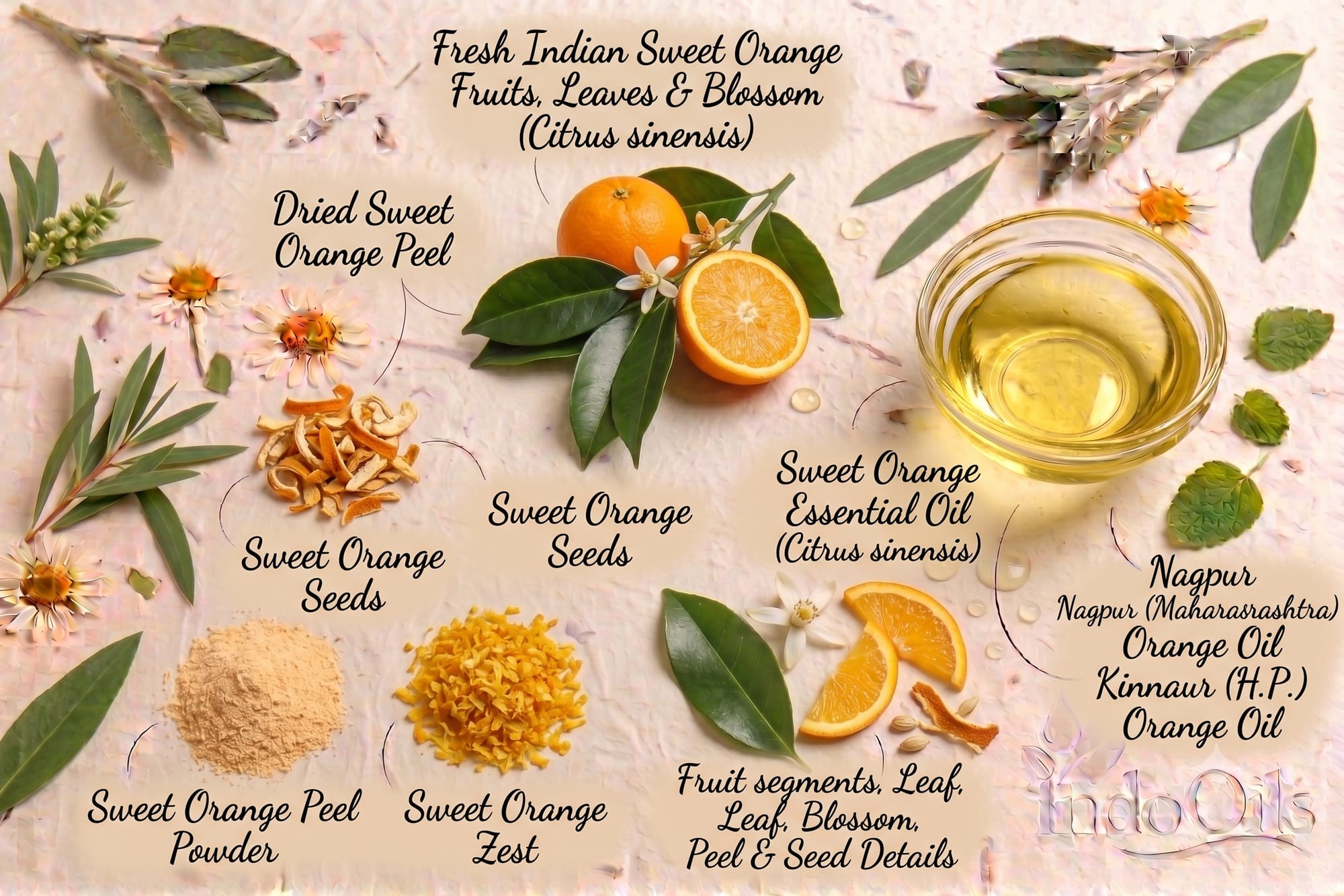
- Citrus oils such as Sweet Orange and Bergamot are rich in limonene, and often contain linalool and citral.
- Clove and cinnamon oils, such as Clove Bud and Cinnamon Bark, are high in eugenol or cinnamal.
- Floral oils such as Rose (Bulgaria), Geranium and Ylang Ylang contain geraniol, citronellol, linalool and related compounds.
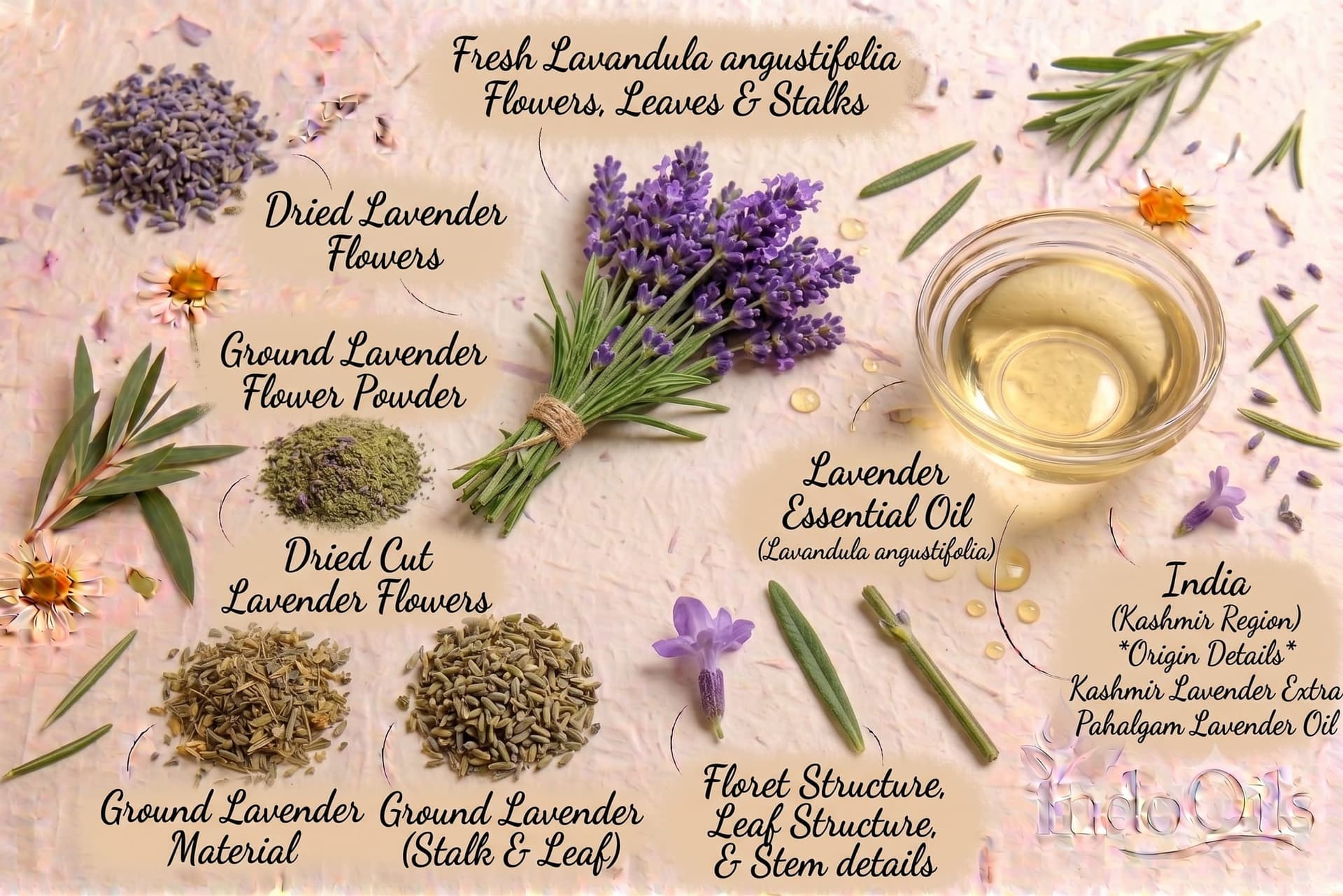
- Lavender oils, such as Indian Lavender, are high in linalool.
The amounts vary with origin, harvest and distillation, so the allergen profile of one lot can differ from the next. That is why a single generic statement is not enough.
A worked example
Suppose you add 1% sweet orange oil to a body lotion, which is a leave-on product. Sweet orange oil is typically around 90% limonene or more.
- Limonene in the finished lotion is roughly 1% × 0.9 = 0.9%.
- The leave-on threshold is 0.001%.
- 0.9% is far above the threshold, so "Limonene" must appear in the ingredient list.
Even at 0.1% oil, limonene would still be around 0.09%, well over the limit. In practice, almost any leave-on product made with essential oils will need to declare several allergens. The real question is which ones, and that depends on accurate data for each oil.
For blends, you repeat the calculation for every allergen in every oil and add them up. That is only possible if each supplier gives you percentages, not a list of names.
The documents to ask your supplier for
1. Allergen declaration with percentages
A statement listing each regulated allergen in the oil with its concentration as a percentage. Check that it covers the expanded EU list, not just the original 26, and that it says which list it was prepared against.
2. Data that matches the lot you receive
Natural variation is real, so the allergen data should be based on analysis of the lot you are buying, or at least kept current. Ask how often the declaration is updated and make sure the lot number on it matches the lot number on the drum.
3. GC-MS report and certificate of analysis
The GC-MS chromatogram is the source of the allergen figures. It also confirms identity and helps detect adulteration. The certificate of analysis (CoA) adds physical tests such as specific gravity and refractive index.
4. IFRA certificate
The IFRA Standards set maximum use levels for certain fragrance materials in each product category, such as lip products, leave-on skin products and candles. An IFRA certificate for the oil tells your perfumer or safety assessor how much can be used in your type of product. Make sure it refers to the current IFRA amendment.
5. Safety data sheet
A safety data sheet (SDS) prepared to the rules of your market, covering hazard classification and safe handling. Many essential oils are classified as skin sensitisers, so this matters for your workplace as well as your product.
A short checklist before your first order
- Ask for a sample allergen declaration and IFRA certificate for the exact oil you plan to buy, before you place the order.
- Check that the declaration covers the expanded EU list and gives percentages.
- Confirm that documents are lot-specific or kept current, and carry lot numbers.
- Run the numbers for your planned dose and product type, leave-on or rinse-off.
- Keep every document on file with your product information file and safety assessment.
A supplier who sends these documents as standard is telling you their quality control is built for buyers who must pass this information downstream, and that is now most buyers.
How we can help
We supply essential oils, absolutes and carrier oils in 20 kg and 50 kg packs, with a minimum order of one pack. Every lot ships with a certificate of analysis and a safety data sheet, and allergen declarations, IFRA certificates and GC-MS reports are available on request. Many of our documents are on the downloads page.
To get the right documents, tell us:
Product + your product type (leave-on or rinse-off) + planned dose + destination market
Send a bulk inquiry, or request a sample together with its documents. For more on choosing oils for cosmetics, see our importer checklist for cosmetic essential oils and our carrier oils buyer's guide, or browse the essential oils range and our cosmetics and personal care page.
Buying in bulk?
20 kg and 50 kg packs, with a certificate of analysis for every lot.
Tell us the product, quantity and destination, and we will come back with a quotation.