India is the world's largest producer of spices, and it is also one of the biggest producers of spice oleoresins: the concentrated colour, heat and flavour of a spice in liquid form. Snack makers, sauce and seasoning houses, meat processors, beverage brands and ready-meal factories use them in place of ground spice because they are consistent, clean and easy to dose.
This guide explains what food manufacturers in the USA, Europe, the UK, the Middle East and Asia should know before buying spice oleoresins in bulk from India. If turmeric is your main interest, see our separate turmeric oleoresin buyer's guide.
What a spice oleoresin is
An oleoresin is made by extracting a dried, ground spice with a food-grade solvent and then removing the solvent. What is left is a thick liquid or paste containing:
- the volatile oil — the aroma, the same compounds you would find in the spice's essential oil;
- the non-volatile flavour and colour compounds — such as capsaicin in chilli, piperine in pepper, gingerols in ginger and the red carotenoids in paprika; and
- the resins and fixed oils that carry them.
This is the key difference from a spice essential oil, which is steam distilled and carries the aroma only. An oleoresin gives you the full taste of the spice, heat and colour included.
Why manufacturers switch from ground spice
- Consistency. Each lot is standardised to a measured strength, so a recipe tastes and looks the same all year, whatever the crop.
- Cleaner product. No fibre, specks or grit in clear sauces, brines and beverages, and a much lower microbial load than raw spice.
- Smaller doses. A small quantity of oleoresin replaces many kilograms of ground spice, which saves storage space and freight.
- Even distribution. Oleoresins can be plated onto salt, sugar, dextrose or flour, or mixed into oil, so flavour spreads evenly through a seasoning blend.
Standard oleoresins are oil-soluble. If you need to use one in a water-based product, tell us; the formulation route (emulsion, dispersion on a carrier and so on) depends on your application.
Our main spice oleoresins
Paprika oleoresin — natural red colour
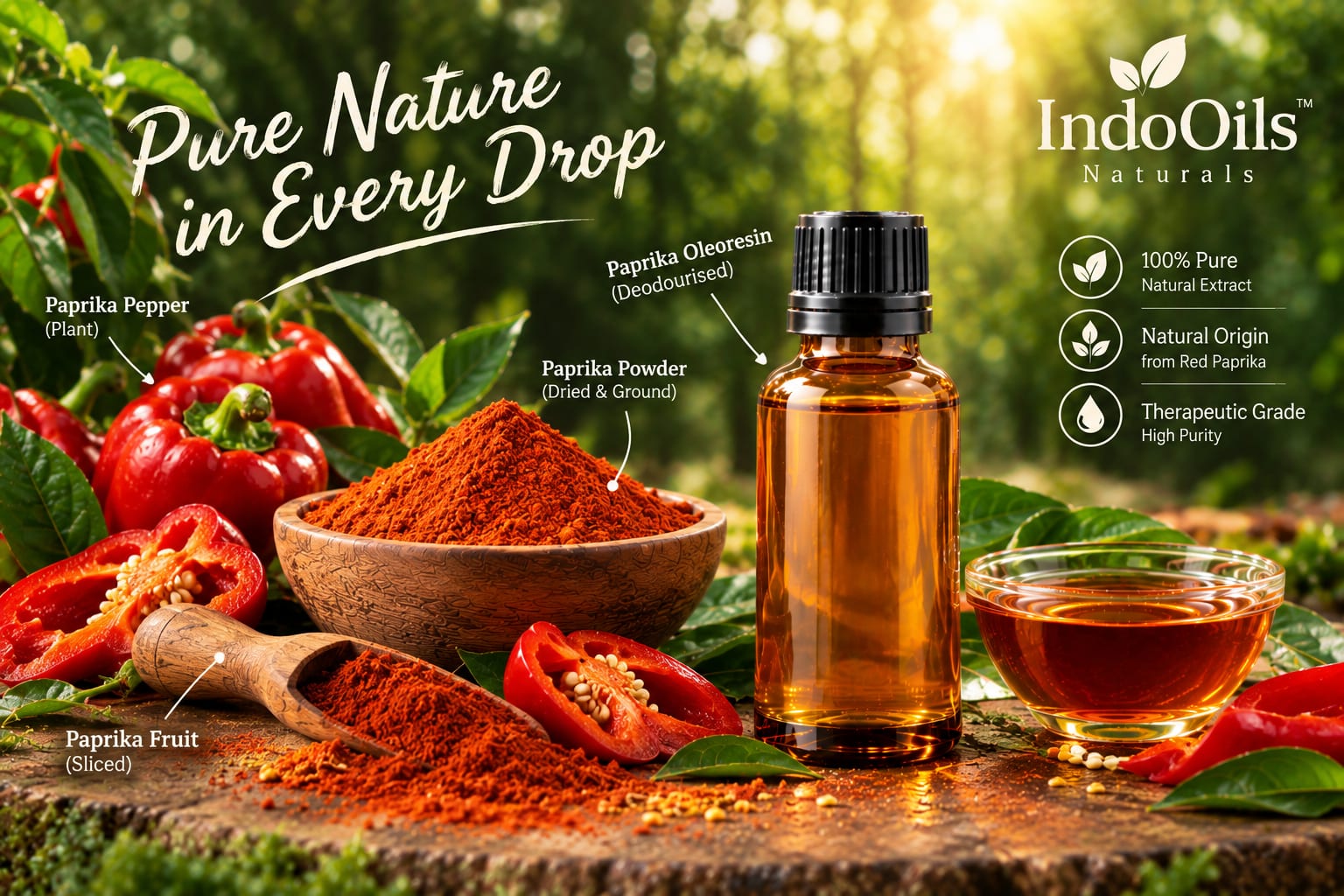
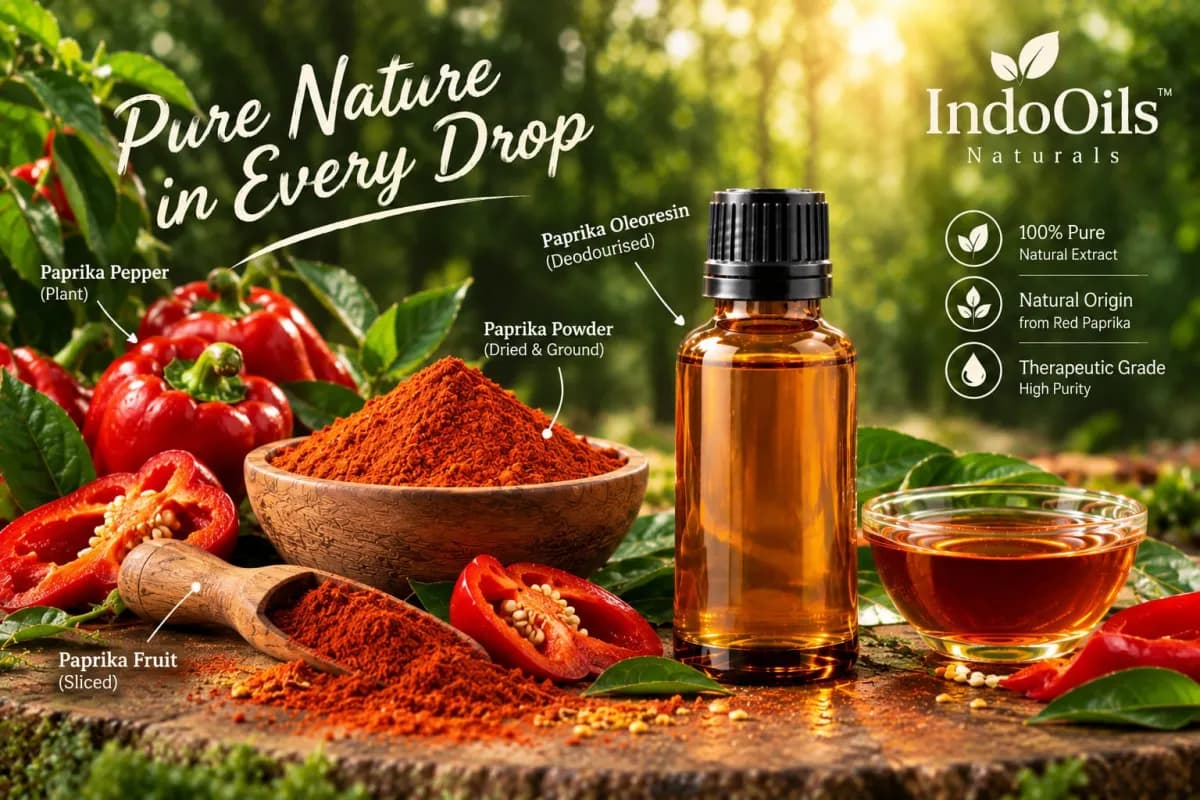
Paprika oleoresin is extracted from the dried pods of Capsicum annuum. Its red-orange colour comes from carotenoids, chiefly capsanthin and capsorubin, and it is one of the most widely used natural red colours in snacks, sauces, sausages, cheese coatings and seasonings.
Our Paprika Oleoresin Deodourised is processed to remove the strong paprika odour, so it adds colour without changing the flavour of your product. Buy it by colour value, which is quoted in colour units (CU) or ASTA units. Paprika colour fades with light, heat and air, so check stability in your finished product and packaging.
Capsicum oleoresin — controlled heat
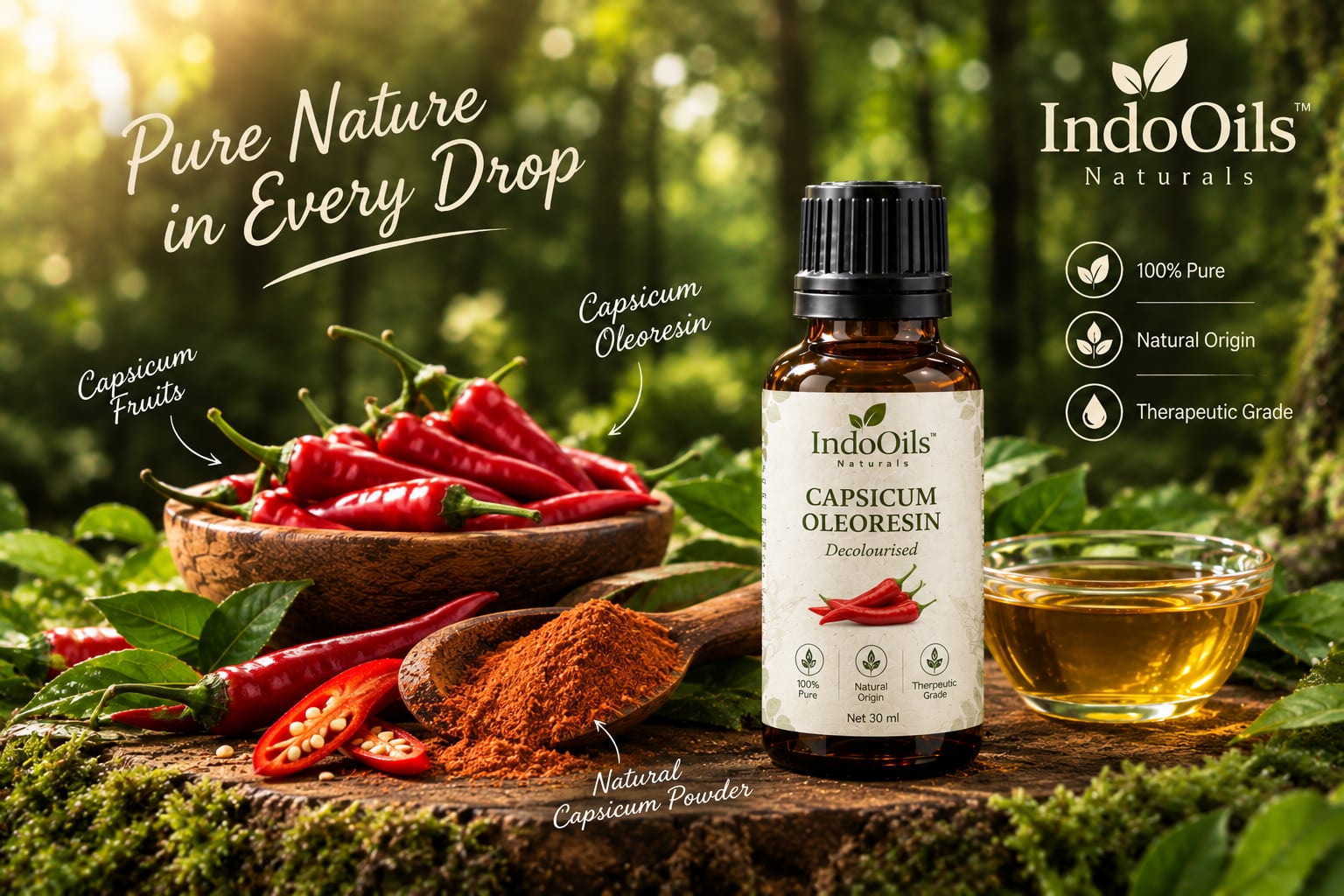
Capsicum oleoresin carries the pungency of chilli, from capsaicinoids such as capsaicin and dihydrocapsaicin. Strength is quoted as a capsaicinoid percentage or in Scoville Heat Units (SHU).
Our Capsicum Oleoresin Decolourised gives intense heat with the red colour removed, so you can make a product hotter without making it redder. It is used in hot sauces, meat seasonings, snack dusts and noodle sachets, and in some topical pharmaceutical preparations.
Ginger oleoresin — warm and fresh
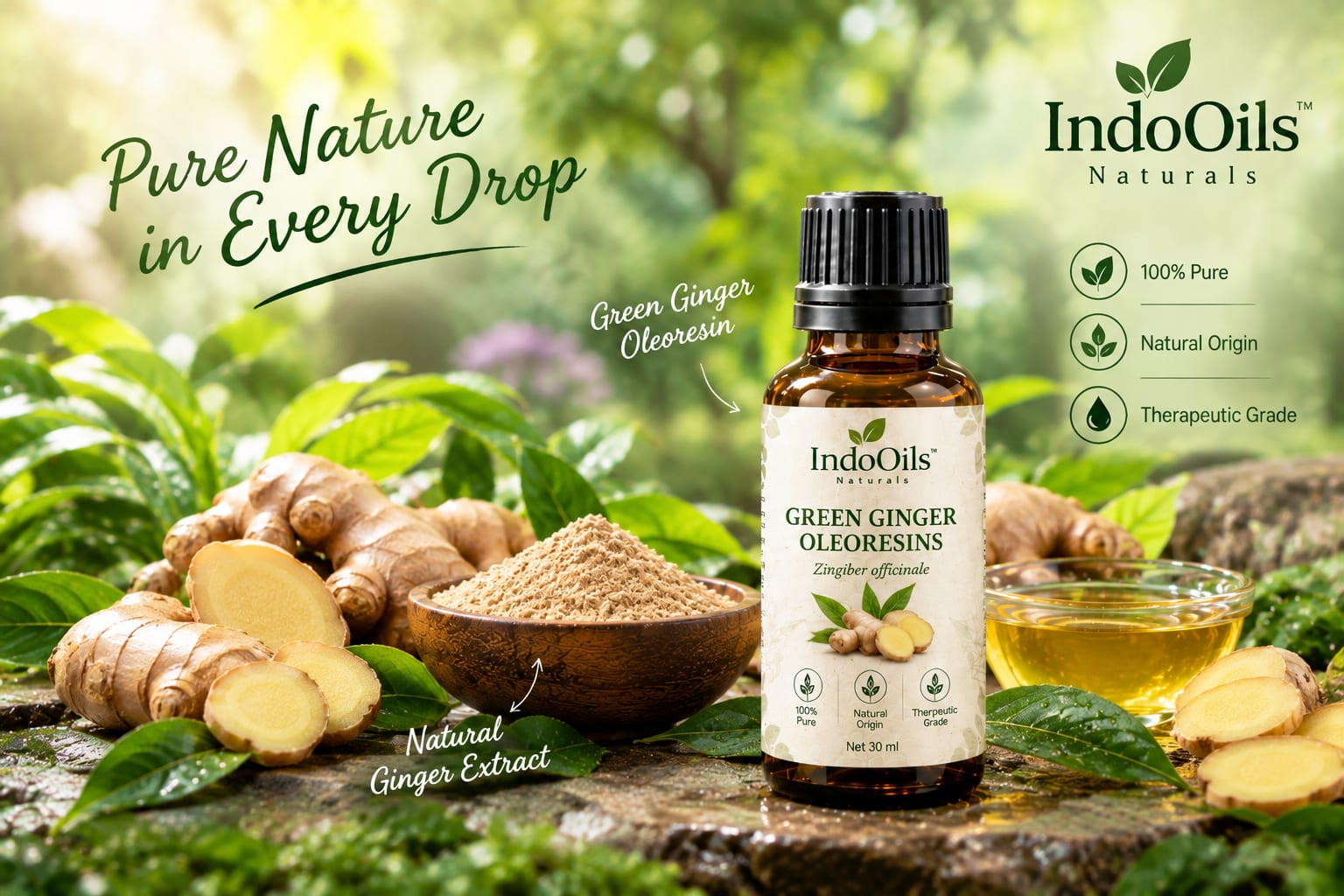
Ginger oleoresin (Zingiber officinale) combines ginger's aroma with its pungent compounds, the gingerols and shogaols. Our Green Ginger Oleoresin has a bright, fresh, citrusy profile that suits ginger ale, ginger beer, ginger shots, confectionery, Asian sauces and marinades.
Pepper oleoresins and piperine
Pepper oleoresins are standardised on piperine (the pungent compound) and volatile oil (the aroma). We offer White Pepper Oleoresin for light-coloured sauces, soups and processed meats where black specks are unwanted, and Long Pepper Oleoresin (pippali) for specialty spice mixes, pickles and Ayurvedic preparations.
For nutraceuticals, Piperine Powder is a purified black pepper extract used as a bioavailability enhancer, often alongside curcumin.
Cardamom and clove oleoresins
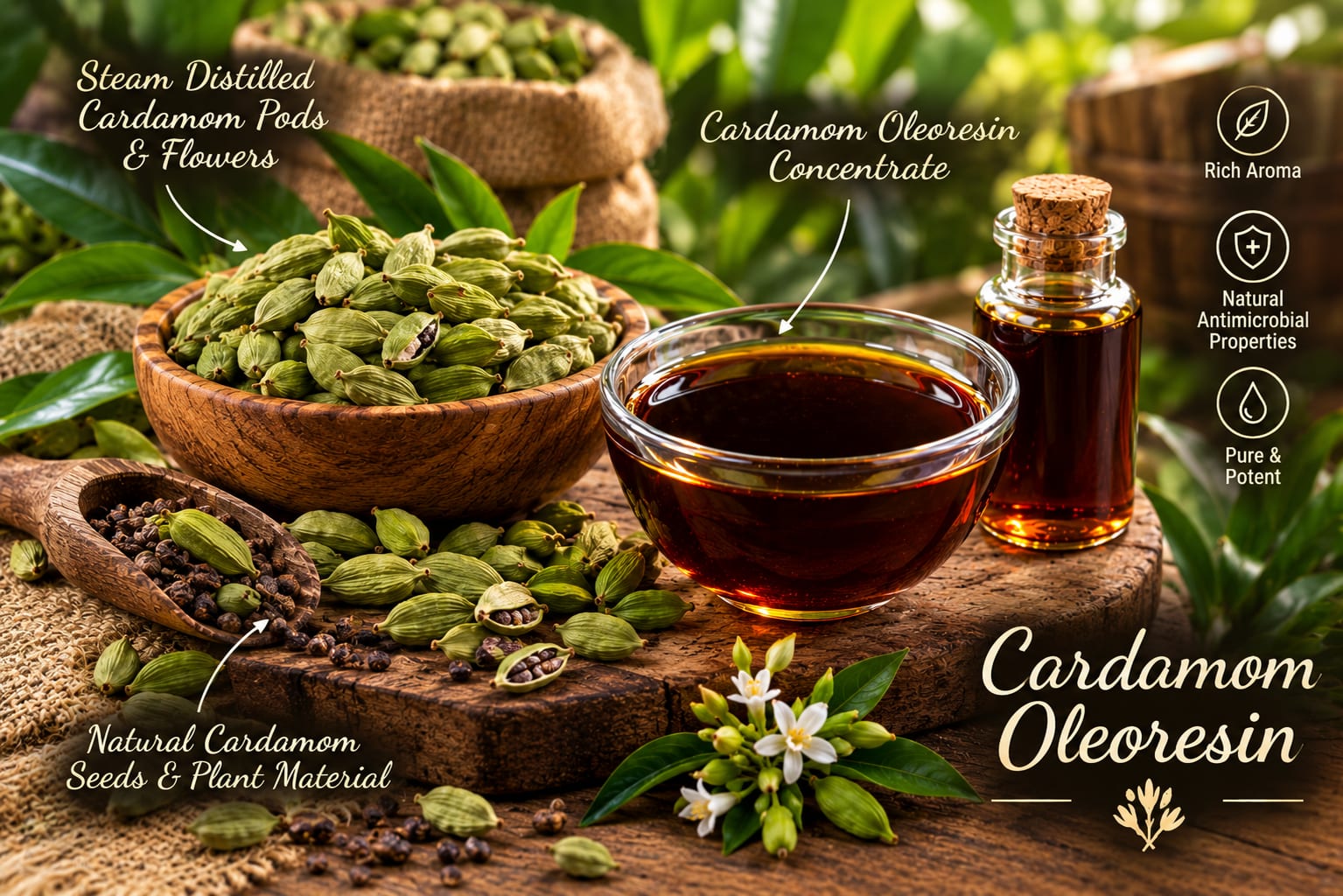
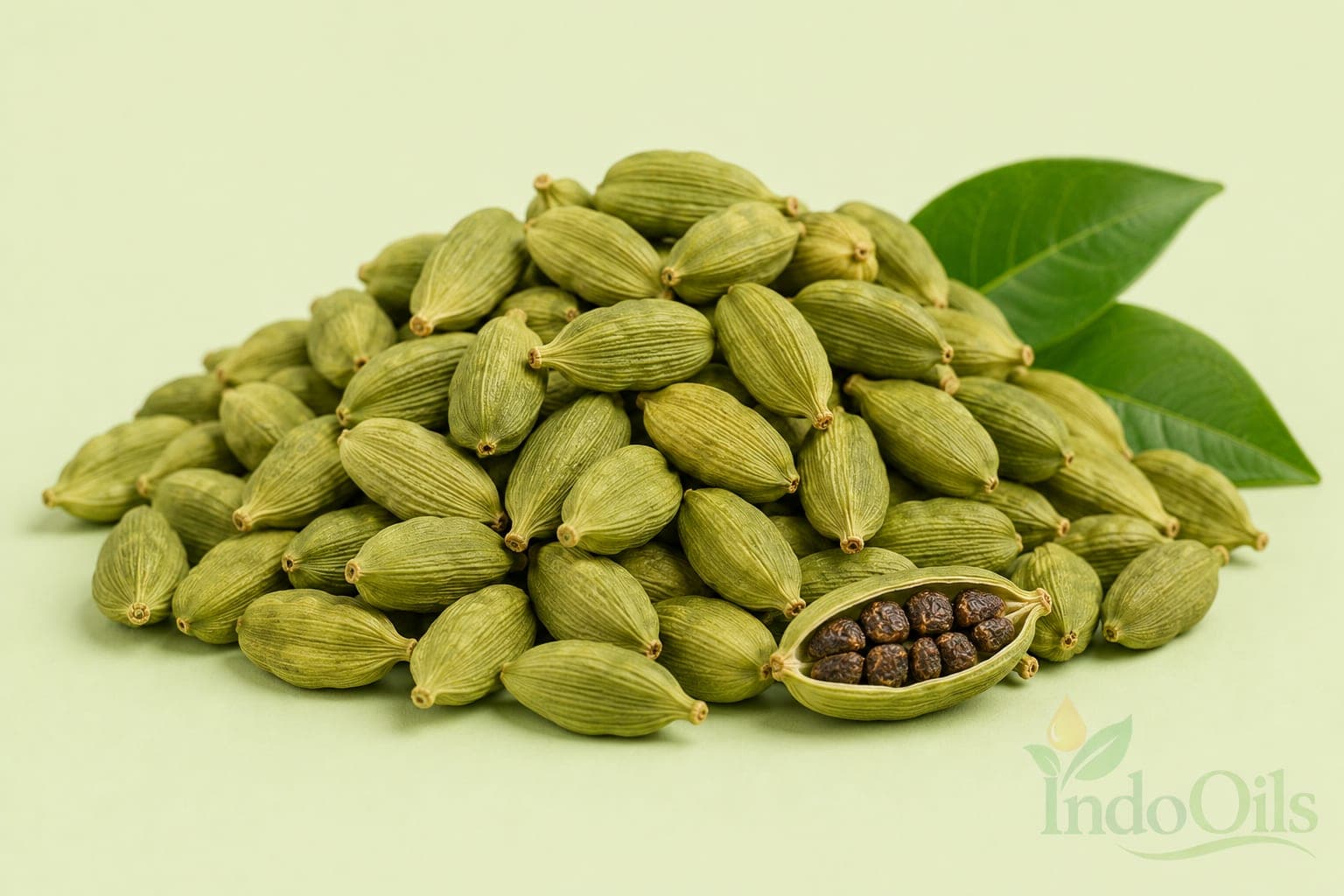
Cardamom Oleoresin from green cardamom (Elettaria cardamomum) brings a sweet, fresh, aromatic note to tea and coffee blends, bakery, dairy desserts and confectionery. Clove Oleoresin (Syzygium aromaticum) is rich in eugenol and gives a warm, sweet pungency to meat curing, baked goods, sauces and oral care.
The rest of the spice rack
We also supply oleoresins of cumin, coriander, nutmeg, mace, cassia, celery, mustard, dill and onion, so a seasoning house can source a full blend from one supplier.
The specifications that matter
Every oleoresin should come with a certificate of analysis (CoA). Depending on the spice, check:
- Strength parameter. Colour value for paprika, capsaicinoids or SHU for capsicum, piperine for pepper, curcuminoids for turmeric, and volatile oil content for aromatic spices such as cardamom, clove, cumin and coriander.
- Residual solvents. The extraction solvent must be removed to within the limits of your market. EU buyers usually check against the EU rules on extraction solvents.
- Contaminants. Ask for pesticide residue, heavy metal and, for chilli and paprika, aflatoxin results.
- Adulterants and process contaminants. For red pepper products, EU and UK buyers often ask for a Sudan dye test, and many now ask for ethylene oxide results on Indian spice products.
- Microbiology — total plate count, yeast and mould, and pathogens.
- Lot number, manufacture date and best-before date that match the label.
Allergens and labelling
Two oleoresins in our range come from spices that are allergens under EU and UK law: celery and mustard. If you use either, even in small amounts, they must be declared on your label in those markets. Check the rules for your own destination country, too.
In the EU, paprika and capsicum extracts used mainly for colour are treated as the food colour E160c (paprika extract), so how you use and label them matters. Tell us how you plan to use an oleoresin and we will send the documents you need.
Storage and handling
- Store oleoresins in sealed original packs, in a cool, dry place away from direct light. Paprika and turmeric colour fade fastest in light and air.
- Oleoresins thicken in the cold. Warm gently and stir until uniform before weighing, as some components can settle.
- Use stainless steel or food-grade plastic for handling, and re-seal opened packs promptly.
- Our oleoresins carry a 36-month shelf life in sealed original packaging.
Ordering spice oleoresins in bulk
We supply spice oleoresins in 20 kg and 50 kg packs, with a minimum order of one pack. Every lot ships with a certificate of analysis and a safety data sheet, and specifications and further test reports are available on request. Many of our documents are on the downloads page.
To get a quotation, send us:
Product + required strength (colour value, SHU, piperine or volatile oil) + quantity + application + destination country
We will come back with the most suitable grade and supply options. You can request a sample to test in your own recipe, or send a bulk inquiry directly.
Browse the full oleoresins range and our spice oils, or see how we work with the food and beverage industry.
Buying in bulk?
20 kg and 50 kg packs, with a certificate of analysis for every lot.
Tell us the product, quantity and destination, and we will come back with a quotation.