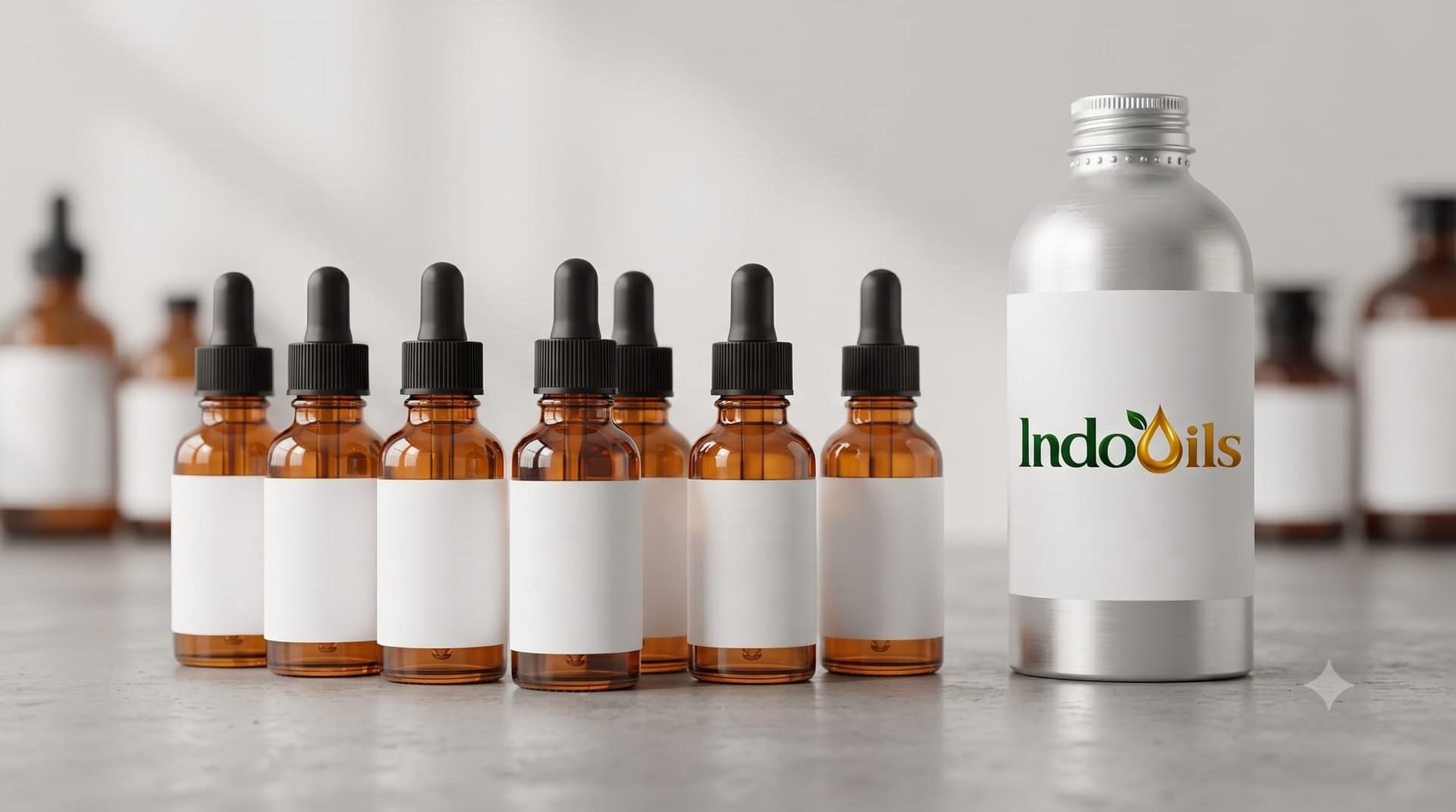
More and more brands sell essential oils, massage oils and diffuser blends under their own name without running a distillery or a filling line. They work with a private label manufacturer. The manufacturer supplies the oil, fills it, labels it and packs it, and the brand owner handles marketing and sales.
India is a natural place to do this. It distils many of the oils that sell best, including peppermint, vetiver, lemongrass, ginger and turmeric, and it has the extraction, testing and packing capacity to supply finished goods for export. This guide explains how private label works, what to prepare, which rules apply in your market, and how to avoid the mistakes that delay a first launch.
Private label, white label and custom formulation
These three terms are often mixed up. They describe different levels of involvement:
- White label means taking a standard product, such as a single essential oil or a ready-made massage oil, and putting your brand on it. This is the fastest route to market.
- Private label means the product is made and packed under your brand to your specification: your bottle, your label, your batch coding, and often your choice of grade and origin.
- Custom formulation means a product is developed for you, such as a signature blend, a set dilution in a carrier oil, or a copy of a product you already sell whose supply has become unreliable.
Many brands start with single oils on a white or private label basis and add custom blends once the range is selling. Our private label and contract manufacturing service covers filling, labelling and packing. Our custom formulation team develops blends to your brief and keeps them exclusive to you.
Step 1: Write a clear brief
A good brief saves weeks. Before you contact any manufacturer, write down:
- The products. For example, 12 single oils, 4 blends and 3 massage oils. List each one with its botanical name, because "lavender" or "eucalyptus" can mean several different species and origins.
- The format. Pack size (10 ml, 30 ml, 100 ml), bottle type (amber glass, aluminium, PET), closure (dropper, orifice reducer, pump) and outer packaging.
- The market. The countries you will sell in decide the labelling and safety rules that apply, so name them early.
- The volume. Your expected first order and a realistic monthly or quarterly figure after launch.
- The claims. "100% pure", "organic", "for aromatherapy" and similar claims each need evidence. Decide now which ones you plan to make.
Step 2: Choose your oils and grades
The oil inside the bottle is what customers notice when they reorder. For each product, decide on:
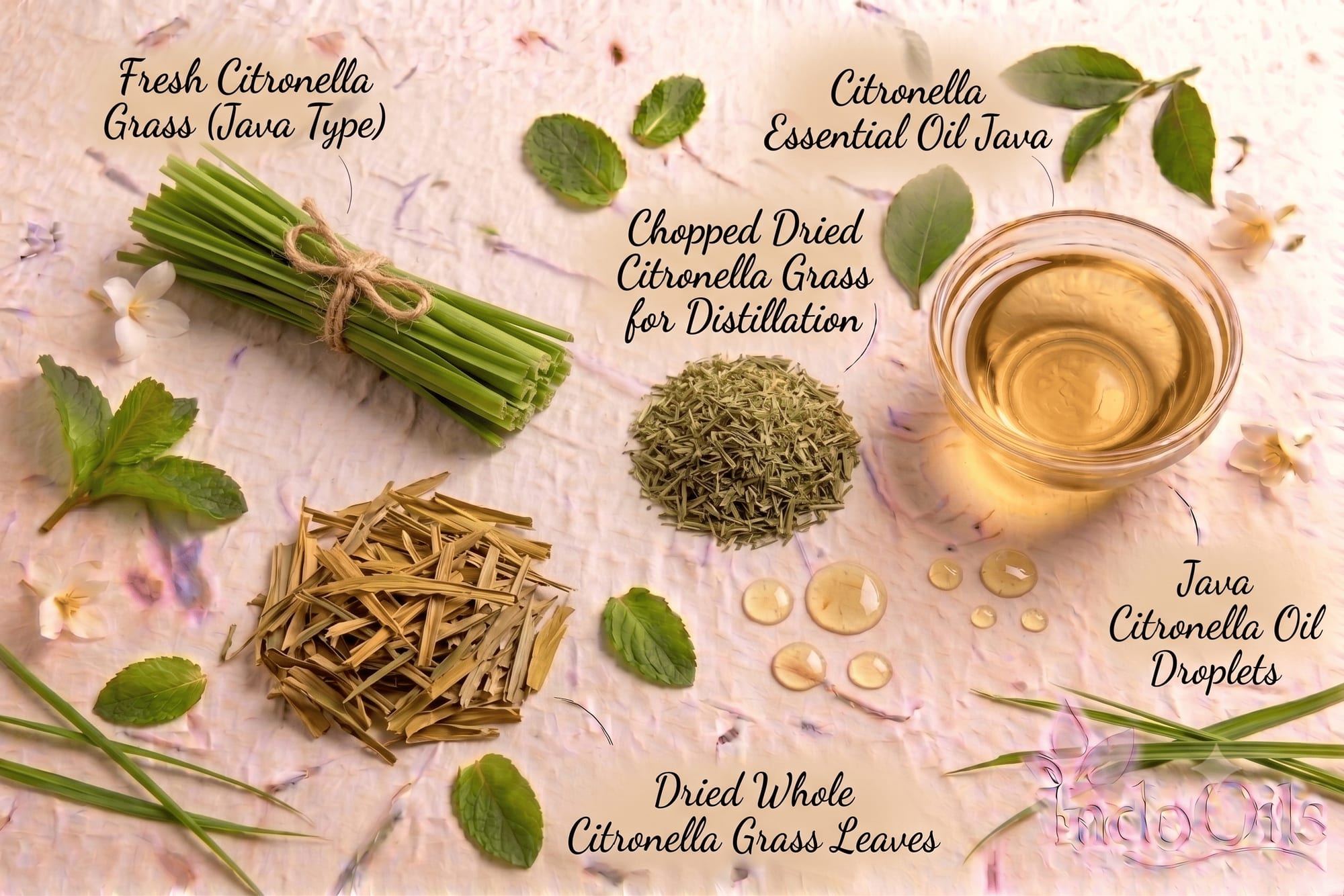
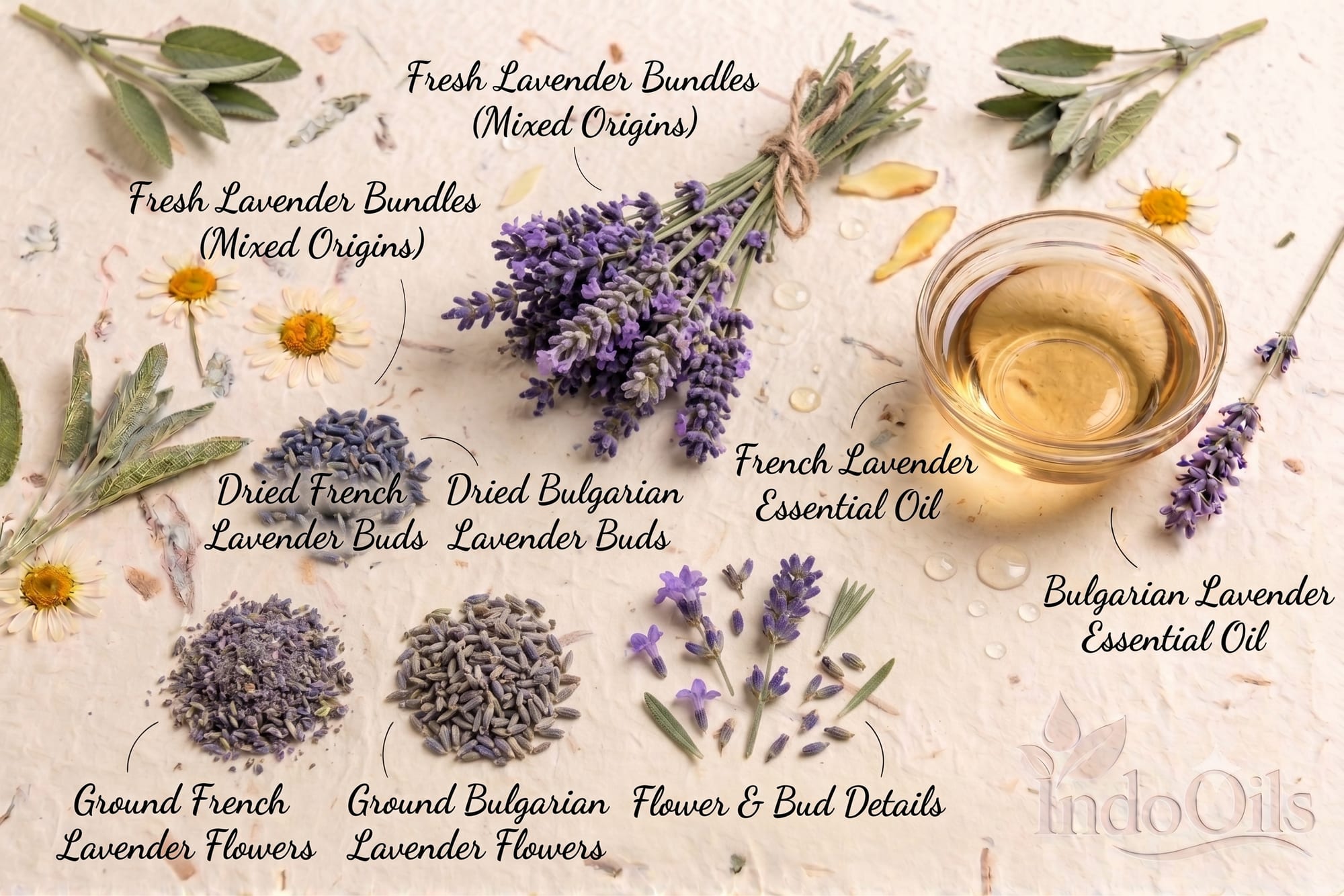
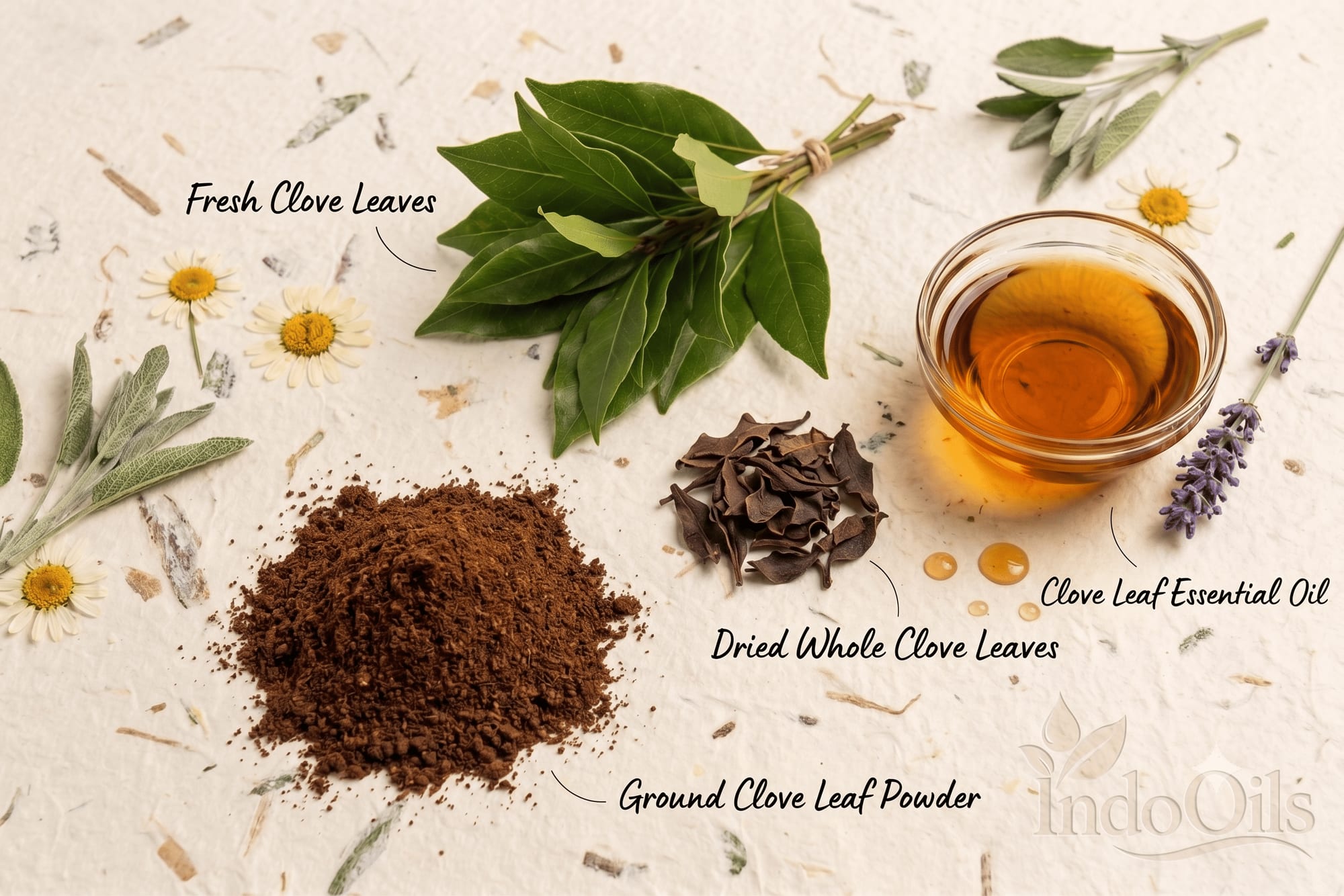
- Species and origin. Indian Lavender Essential Oil and Lavender (France and Bulgaria) are both lavender, but they smell different and cost differently. The same goes for Clove Bud and Clove Leaf oil, or Java and Ceylon citronella.
- Grade. Some oils are sold in several grades. Peppermint, for example, comes as natural, rectified and redistilled grades. Read our peppermint buyer's guide to see how much the grade changes the product.
- Strength for diluted products. Massage oils and roll-ons are an essential oil diluted in a carrier oil. You need to state the essential oil percentage and choose the carrier.
A typical starter range might include Peppermint, Eucalyptus, Lemon, Sweet Orange, Rosemary, Ylang Ylang and Vetiver, alongside a carrier such as Jojoba or Sweet Almond. Browse the full essential oils, organic essential oils and carrier oils ranges to plan yours.
If your brand is aimed at spas and wellness, we also supply ready-made blends that can carry your label, such as Destress Massage Oil, Lavender Massage Oil and Sandalwood Turmeric Massage Oil, and diffuser oils such as Lavender, Eucalyptus and Lemongrass. See the spa oils and aroma diffuser oils categories.
Step 3: Test samples before you commit
Never approve a private label range from a price list alone. Order evaluation samples, smell them side by side with what you sell today, and send the important ones to an independent laboratory.
Our sample request form is the place to start. Under our sample policy, standard evaluation sizes are 10 ml, 50 ml and 100 ml, first samples of catalogue items are generally free (freight is charged), and every sample ships with the batch certificate of analysis. The sample you approve becomes the standard that later batches are checked against.
For essential oils, the most useful test is GC-MS. It shows the oil's chemical profile and is the main way to detect adulteration, which is the most common problem in this trade. Our quality assurance page explains what we test on each batch.
Step 4: Get the labelling right for your market
The label is where most first launches go wrong. Rules depend on where you sell and on how you describe the product. The points below are a starting checklist, not legal advice. Confirm the details with a regulatory adviser in your market.
European Union
An essential oil sold for use on the skin is usually a cosmetic under Regulation (EC) No 1223/2009. It needs a Responsible Person in the EU, a safety assessment (CPSR), notification on the CPNP portal, and an INCI ingredient list that includes any of the listed fragrance allergens above the threshold. Neat essential oils sold to the public may also need CLP hazard labelling, and many oils rich in terpenes, such as citrus and pine oils, carry an aspiration hazard (H304) that requires a child-resistant closure and a tactile warning.
United Kingdom
The rules are similar to the EU's but separate. You need a UK Responsible Person and a notification on the UK's SCPN service, and you label under UK CLP.
United States
Under the Modernization of Cosmetics Regulation Act (MoCRA), cosmetic manufacturing facilities must be registered with the FDA, and cosmetic products must be listed. Claims matter: an oil marketed to "treat" or "cure" a condition can be regulated as a drug. Keep claims to aroma, cosmetic use and the user's experience.
Every market: fragrance allergens
Fragrance allergens affect every market. Our guide to fragrance allergen labelling and the documents buyers need explains what to ask your supplier for.
As part of our private label service we review label content for your target market. The legal responsibility for the product still sits with the brand owner or their Responsible Person, so build that review into your timeline.
Step 5: Collect the documents
Your Responsible Person, your importer and the larger retailers will all ask for documents. For each product, plan to hold:
- Certificate of analysis (CoA) for every batch
- Safety data sheet (SDS/MSDS) in the format your market requires
- GC-MS report for essential oils
- IFRA certificate and allergen declaration for fragrance use
- Specification sheet with botanical name, INCI name, CAS number and origin
Our downloads page holds the standard documents, and batch documents are issued with each consignment. Our certifications page lists our company certificates, and our traceability page explains how each batch is linked back to its raw material lot. For more on this, see our importer checklist for bulk essential oils and why clean-label traceability now matters to retail buyers.
Step 6: Packaging that protects the oil
Essential oils react with light, heat, air and some plastics. Good private label packaging:
- Uses amber or cobalt glass, or aluminium, for neat essential oils. Avoid thin plastics, which some oils (especially citrus) can soften or taint.
- Uses an orifice reducer or dropper that suits the oil's thickness. Vetiver and sandalwood flow slowly, while citrus oils flow quickly.
- Carries a batch number and expiry or best-before date on every unit, so a complaint can be traced to a batch.
- Keeps headspace small. Air in a half-empty bottle speeds up oxidation, which can change the aroma and increase the risk of skin sensitisation.
We fill into your chosen container, apply your labels, and handle cartoning, shrink wrapping and batch coding. Bulk material is packed under nitrogen where oxidation is a risk, as described on our manufacturing page.
Step 7: Plan your timeline and first order
A realistic first private label launch looks like this:
- Brief and quotation: a few days
- Samples and evaluation: two to four weeks, including your own laboratory tests
- Artwork and label review: one to three weeks, depending on how many markets you cover
- Pilot run for approval, where needed
- Production: typically three to five weeks from artwork approval and material availability
Minimum quantities for private label depend on the product and the container. Send us your list and we will confirm the minimum for each item. If you want to buy oils in bulk and fill them yourself, every catalogue product is available in 20 kg and 50 kg packs with a minimum order of one pack. Our wholesale page explains bulk supply, and our FAQ answers common questions on lead times, Incoterms and payment.
Common mistakes to avoid
- Choosing on price alone. A cheap oil that fails a GC-MS test, or smells different from batch to batch, costs more in returns and lost reorders.
- Leaving labels until last. Artwork and regulatory checks are the most common reason a launch slips.
- Making claims you cannot support. "Therapeutic grade" is a marketing term, not a standard. "Organic" needs a valid certificate for the lot.
- No agreed specification. Without a written specification, you have nothing to measure the second batch against.
- Ignoring the carrier. For massage and roll-on products, the carrier oil is most of the bottle. Read our carrier oils buying guide before you finalise it.
Start your private label range
To get a private label quotation, send us:
Product list + pack size and bottle type + target markets + expected first order + any custom blends
Our team will reply with grades, minimum quantities, lead times and the documents your market needs. You can also request samples, send a bulk inquiry, or contact us to discuss your brief. We supply brands across cosmetics and personal care, aromatherapy and wellness and home care and fragrance.
Buying in bulk?
20 kg and 50 kg packs, with a certificate of analysis for every lot.
Tell us the product, quantity and destination, and we will come back with a quotation.