Argan oil is one of the best-known names in skin and hair care. Brands want it on the front of the pack, and buyers want it at a workable cost. Those two wishes pull against each other, because real argan oil comes from one region of one country, and every litre starts with nuts that are still mostly cracked by hand.
That is why argan oil is among the most often diluted carrier oils in the trade. This guide explains what the oil is, the three grades you will be offered, how it is made, what is inside it, which tests show whether a lot is genuine, and which documents to ask for.
It covers Argan Oil from IndoOils, and it is written for formulators, buyers and brand owners in cosmetics, hair care and personal care.
What Argan Oil Is
The argan tree (Argania spinosa) is a thorny, slow-growing tree of the sapodilla family. It grows wild almost only in south-west Morocco, across the Souss plain and the hills between Essaouira, Agadir and Taroudant. UNESCO made the region the Arganeraie Biosphere Reserve in 1998, and Morocco protects the name "Argane" as a geographical indication.
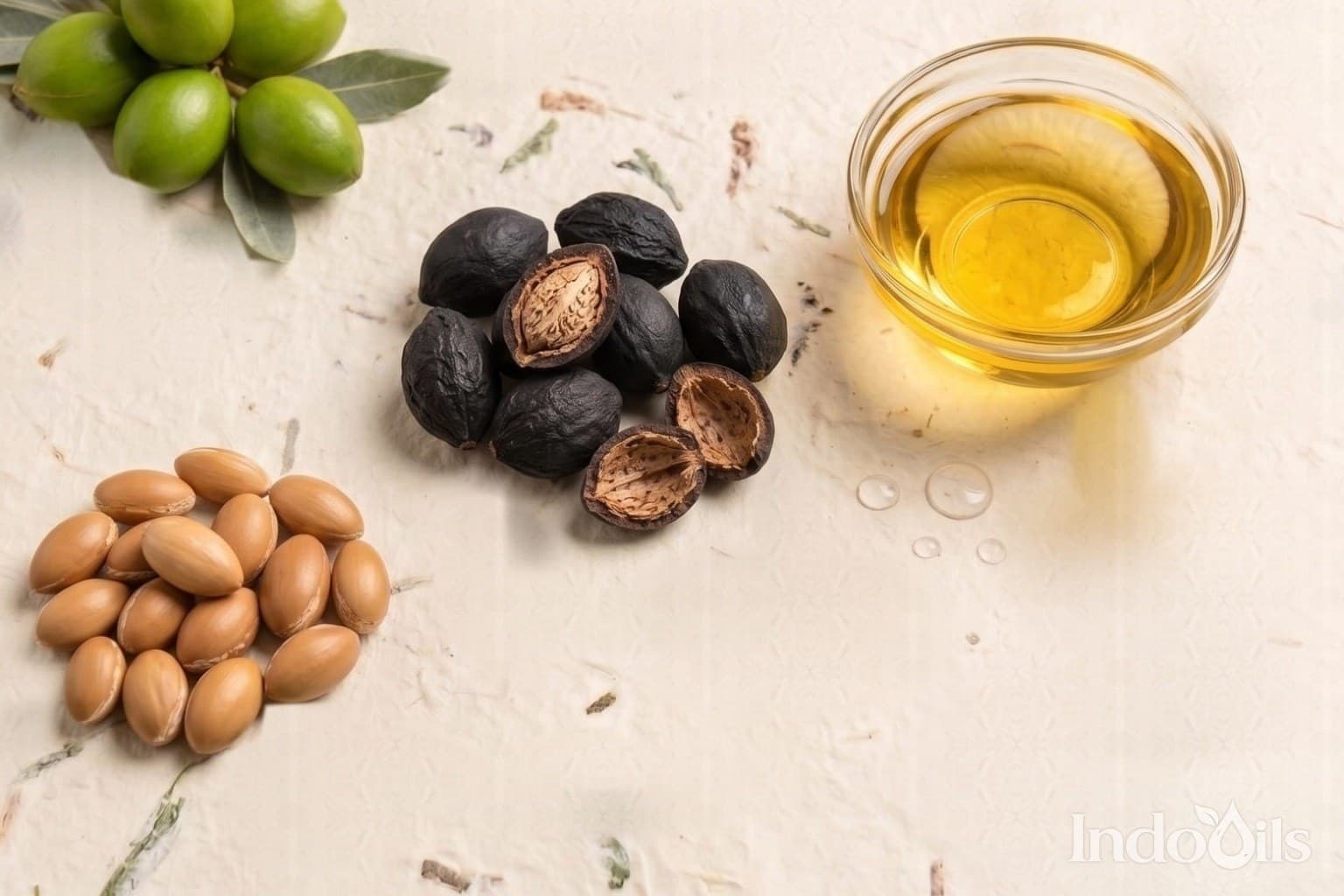
The tree bears a small, olive-like fruit. Under its pulp is a very hard nut, and inside the nut are one to three small, almond-shaped kernels. Those kernels are about half oil.
Argan oil is the fixed oil pressed from the kernels. "Fixed" means it does not evaporate: it is a vegetable oil made of triglycerides, like olive or sunflower oil, not an essential oil.
You may have seen photos of goats standing in argan trees. Goats do eat the fruit, and nuts passed by goats were once collected. Oil for the cosmetic trade is pressed from kernels of fruit picked or gathered from the ground and dried, not from nuts that went through a goat.
Product identifiers
- Product: Argan Oil (Cold Pressed Carrier Oil)
- Botanical name: Argania spinosa (L.) Skeels
- INCI name: Argania Spinosa Kernel Oil
- CAS number: 223747-87-3 (some suppliers also list 299184-75-1)
- EC (EINECS) number: not listed in EINECS
- HSN code: 15159099
- SKU: INDO-106
- Plant part: Kernels
- Extraction method: Cold pressed, from unroasted kernels
- Origin: Morocco, stated per lot
Cosmetic, Deodorised or Culinary
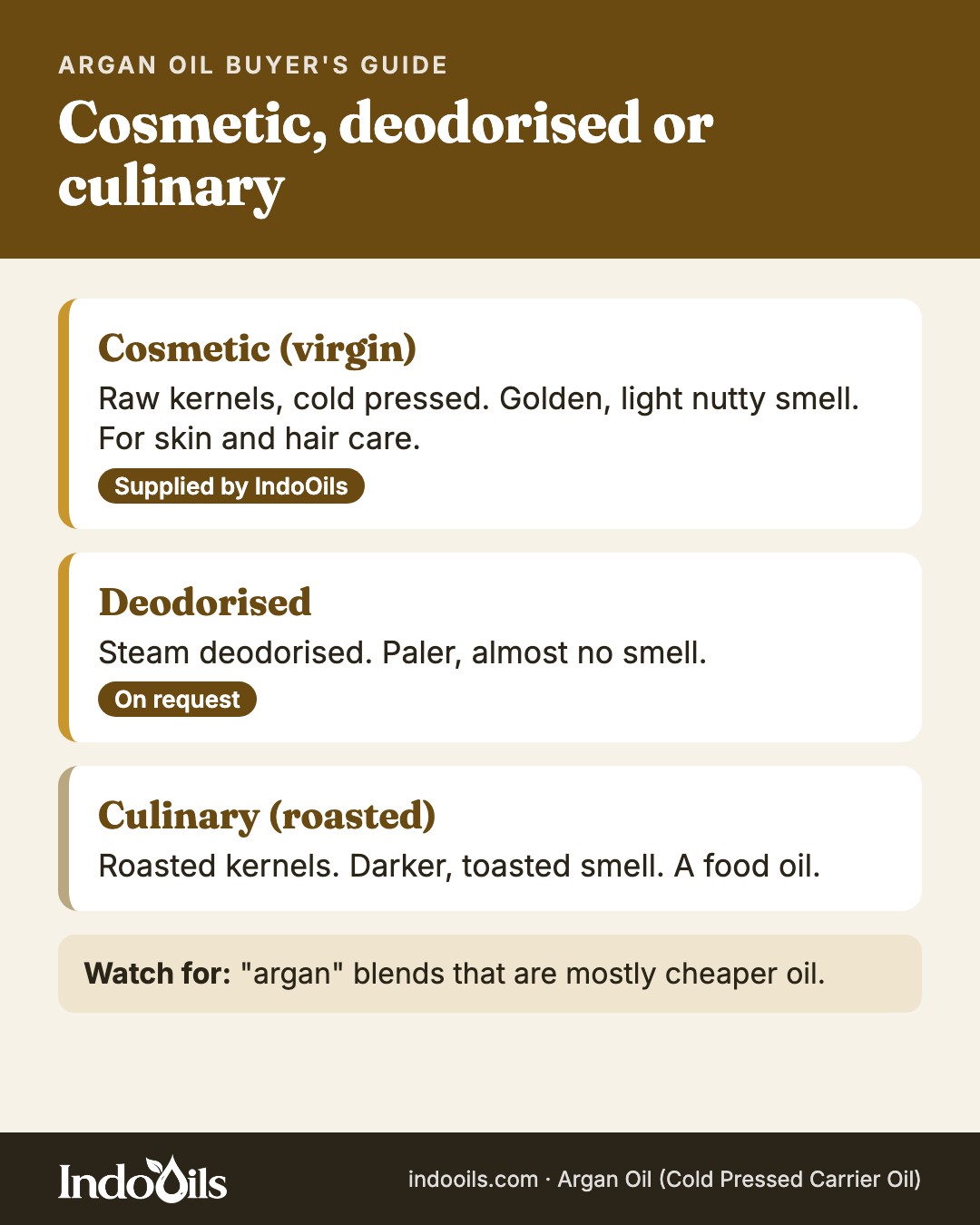
Argan oil is sold in three grades, and the difference starts before pressing:
- Cosmetic (virgin) argan oil is pressed from raw, unroasted kernels. It is yellow to golden, with a light, nutty smell. It keeps its natural tocopherols. This is the grade most skin and hair care brands buy, and the grade IndoOils supplies as standard.
- Deodorised argan oil is cosmetic oil that has been steam deodorised. It is paler and almost odourless, for fine fragrances, baby care or any formula where the oil's own smell would get in the way. It is available on request.
- Culinary argan oil is pressed from kernels that are roasted first, as Moroccan households do for cooking. It is darker, with a strong toasted-nut smell. It is a food oil and the wrong choice for cosmetics; a toasted smell in a "cosmetic" lot is a fault.
The Moroccan standard NM 08.5.090 (2003) grades virgin argan oil by its acidity, the share of free fatty acids. Oil with acidity up to 0.8 % is called extra virgin; higher bands are fine virgin and ordinary virgin; above that, the oil is graded lampante and is not fit to eat. Many cosmetic buyers simply set an acid value maximum in their specification instead, usually 4 mg KOH/g or lower.
Argan blends and "argan" products
Because pure argan oil costs far more than most carrier oils, many products sold with "argan" on the label contain only a little of it. A hair serum may be mostly silicone with a drop of argan oil. A bulk "argan oil" offer far below the market may be argan oil cut with sunflower, soybean or olive oil. That second case is the one a buyer has to test for, and the next sections show how.
How Argan Oil Is Made
Argan oil production still depends on a lot of handwork, which is a large part of its cost:
- Harvest. The fruit ripens in summer. It is picked or gathered from the ground, then dried in the sun.
- Depulping. The dry pulp is removed to free the nut. The pulp is often used as animal feed.
- Cracking. The nut shell is extremely hard. Most nuts are still cracked one by one between two stones, much of it by women's cooperatives in the argan region. Machines exist, but hand cracking remains common because it does not damage the kernels.
- Pressing. For cosmetic oil, the raw kernels go straight to a mechanical screw press. No roasting and no solvent.
- Clarifying. The oil is left to settle, then filtered. This is the virgin oil.
- Deodorising (optional). For deodorised grade, the oil is steam treated to remove its smell.
- Testing and packing. Acidity, peroxide value and a fatty acid profile are checked before the lot is packed.
Commonly quoted figures put the yield at about one litre of oil from 30 to 40 kg of dried fruit. That ratio, the hand cracking, and supply limited to one region explain why argan oil is priced well above oils such as sunflower or sweet almond.
What Is Inside Argan Oil
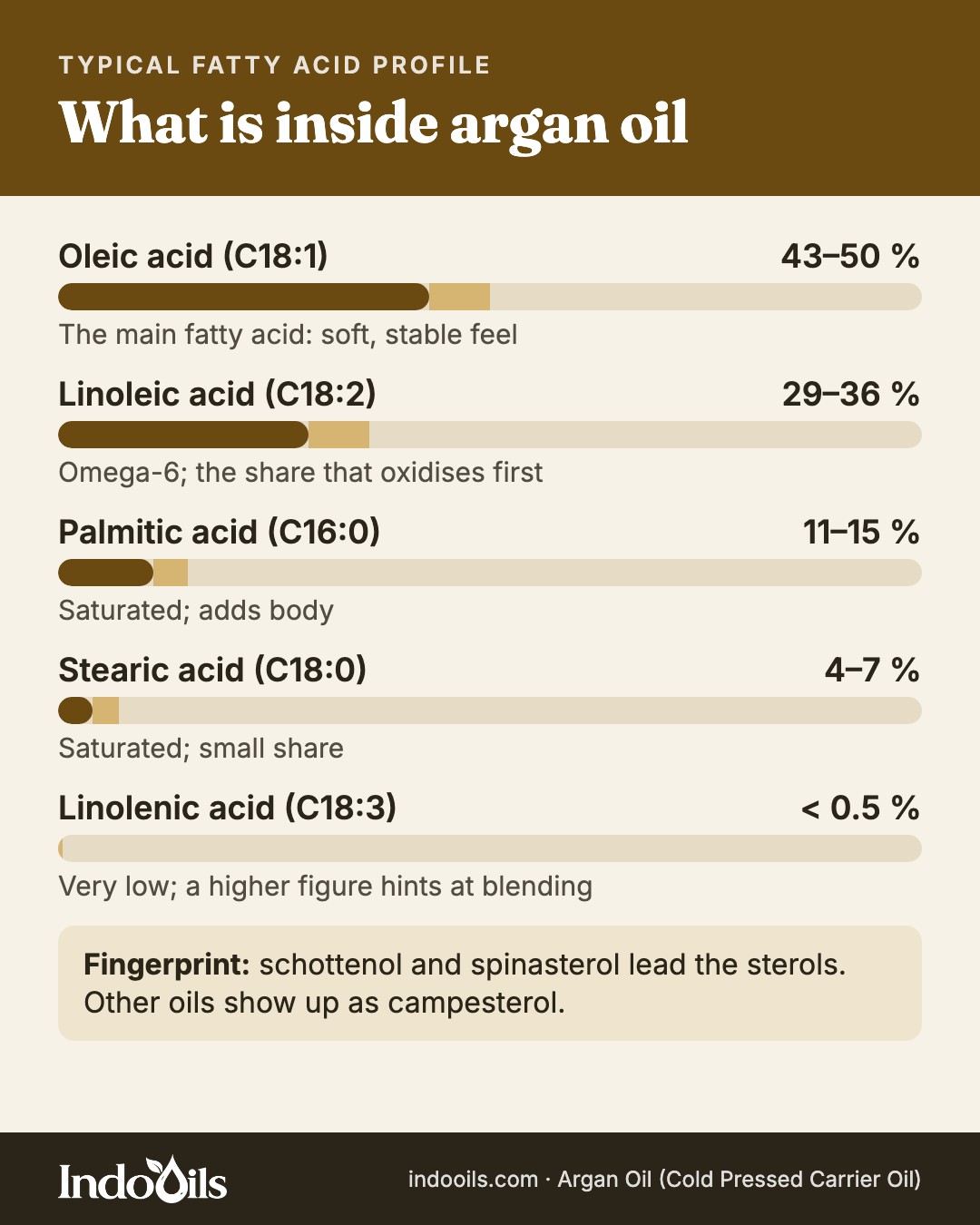
Argan oil is a balanced oil: about 80 per cent unsaturated fatty acids, split between oleic and linoleic acid. Published studies of authentic Moroccan oil give roughly these ranges:
- Oleic acid (C18:1): about 43–50 %. The main fatty acid, which gives argan oil its soft feel and reasonable stability.
- Linoleic acid (C18:2): about 29–36 %. An omega-6 fatty acid; it is the share that oxidises first, so it sets the shelf life.
- Palmitic acid (C16:0): about 11–15 %, and stearic acid (C18:0) about 4–7 %. Saturated fatty acids that give the oil some body.
- Linolenic acid (C18:3): very low, usually below 0.5 % and often below 0.2 %.
Supplier specifications often run wider than these ranges. Agree your own ranges on the GC report of the lot you approve.
The minor components
The small unsaponifiable fraction, about one per cent of the oil, is where argan oil is most distinctive:
- Tocopherols. Argan oil is rich in natural vitamin E, mostly gamma-tocopherol. This helps the virgin oil resist oxidation. Deodorising removes part of it.
- Sterols. Most plant oils are led by beta-sitosterol and contain campesterol. Argan oil is different: its sterols are led by schottenol and spinasterol, two sterols that are rare in other common oils, and it carries almost no campesterol.
That sterol pattern is the most useful fingerprint of genuine argan oil, as the next section explains.
What to Check on the CoA
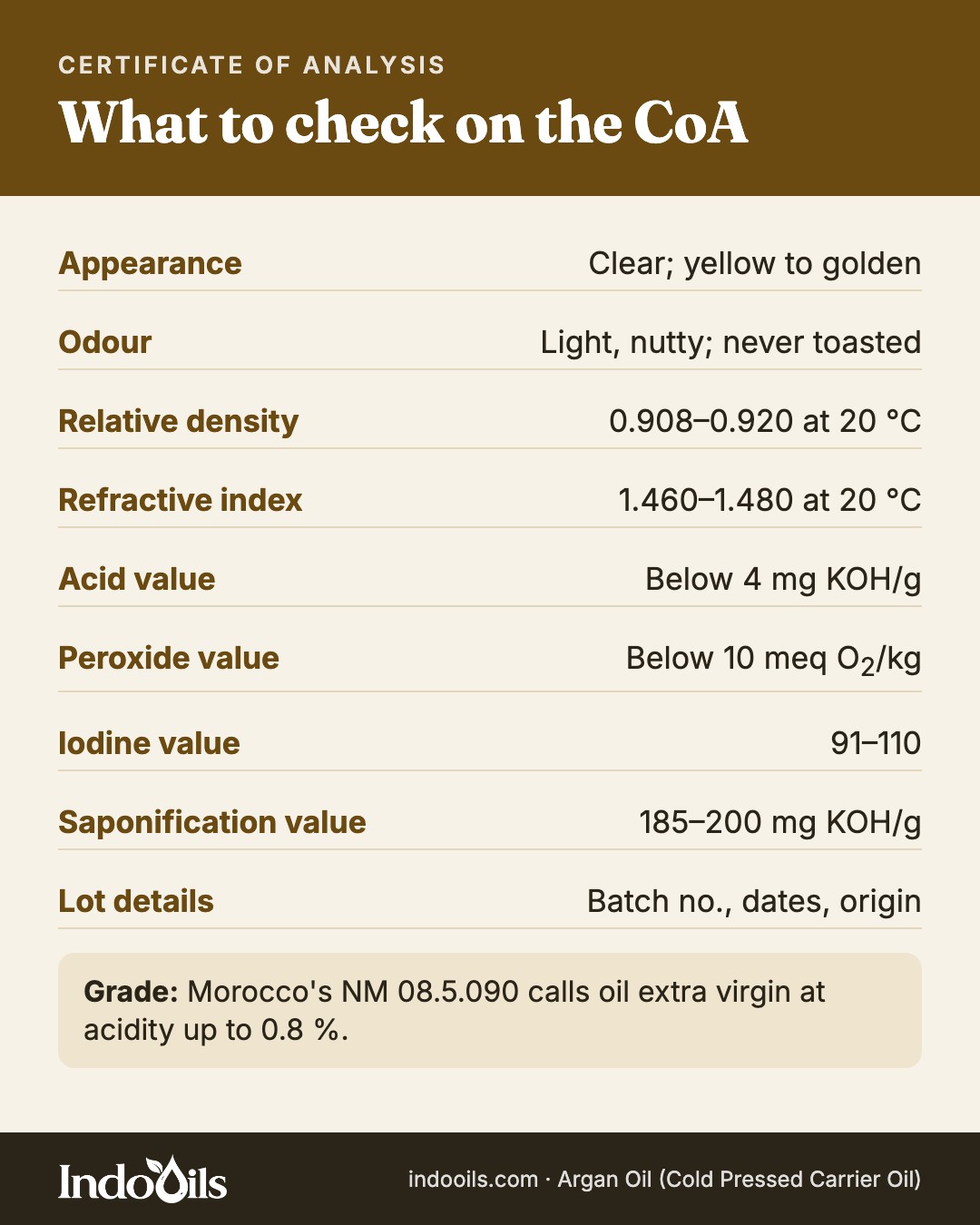
A good certificate of analysis (CoA) for cosmetic argan oil covers these checks. The ranges below are from published supplier certificates; your approved specification should come from the lot you test.
- Appearance: clear, yellow to golden liquid. Deodorised oil is paler.
- Odour: light and nutty for virgin oil; almost none for deodorised. A toasted or roasted smell means culinary oil; a sharp or paint-like smell means oxidation.
- Relative density: about 0.908–0.920 at 20 °C.
- Refractive index: about 1.460–1.480 at 20 °C (most lots sit near 1.470).
- Acid value: below 4 mg KOH/g for cosmetic use. Extra virgin oil under NM 08.5.090 is at 0.8 % acidity or lower.
- Peroxide value: below 10 meq O₂/kg on fresh oil, and much lower is common. A high figure means the oil has started to oxidise.
- Iodine value: about 91–110. It reflects how unsaturated the oil is.
- Saponification value: about 185–200 mg KOH/g. Soap makers need this figure for their lye calculations.
- Fatty acid profile by GC: within the ranges agreed in your specification.
- Lot details: batch number, manufacturing and best-before dates, country of origin.
How to spot blended argan oil
Dilution with a cheaper oil is the main quality risk. Three checks catch most of it:
- Fatty acid profile by GC. Soybean or rapeseed oil push linolenic acid up; sunflower oil pushes linoleic acid well above 36 %; high-oleic sunflower or olive oil push oleic acid above the argan range. Any fatty acid outside the agreed range is a reason to ask questions.
- Sterol profile. This is the strongest test. Genuine argan oil is led by schottenol and spinasterol and has almost no campesterol. Almost every common substitute oil contains campesterol, so a measurable campesterol figure points to blending even when the fatty acids look right. Ask for a sterol profile on the first lot and on any lot that looks or smells different.
- Smell and colour. Virgin argan oil has a recognisable light nutty smell. An oil with no smell at all, offered as virgin, is either deodorised or not argan.
Keep a retained sample of every lot you receive, so you can compare later lots against it.
Where Argan Oil Is Used
Argan oil is used for its feel and its name. It spreads well, absorbs at a moderate pace and leaves skin and hair soft without a heavy film:
- Hair care. The best-known use: hair oils, hair serums, leave-in conditioners, pre-wash oils and hair masks. It is often the hero oil in a blend with lighter oils such as jojoba or sweet almond.
- Face care. Face oils, serums, creams and night creams, alone or blended with speciality oils such as sea buckthorn seed or pomegranate seed oil.
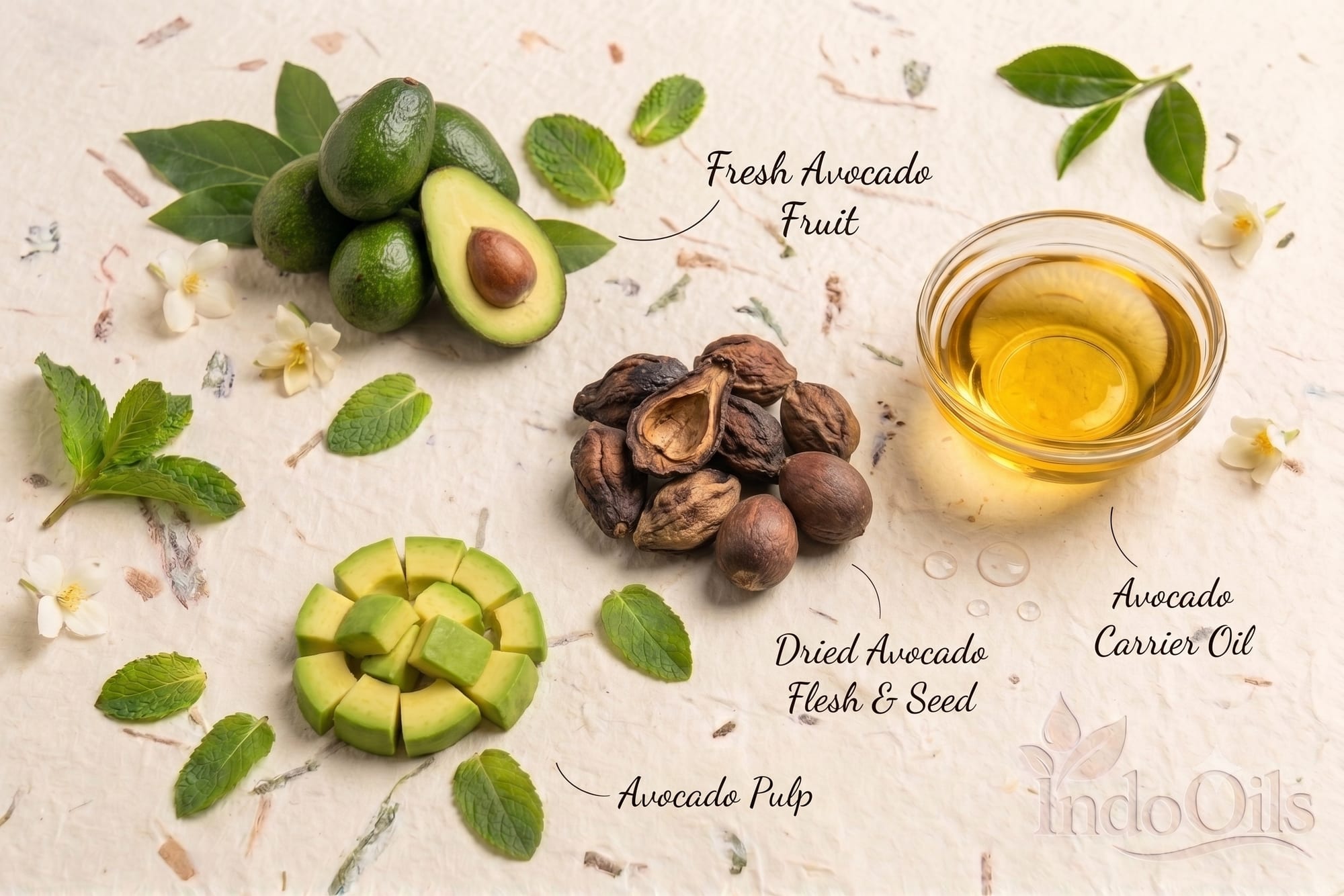
- Body care. Body oils, body butters, lotions and dry oils, often with avocado, apricot kernel or coconut oil.
- Nail and cuticle care. Cuticle oils and nail serums.
- Beard care. Beard oils and balms, where its mild smell suits added fragrance.
- Soap and cleansing. A superfatting oil in premium cold-process soaps, and part of the oil blend in cleansing balms.
- Fragranced oils and massage blends. Its light smell sits well under essential oils such as rose, geranium, lavender, sandalwood, neroli and ylang ylang. Use deodorised oil where the fragrance must stay completely true.
Brands building a private-label range on argan oil can read our private label guide. For the other oils we supply, see the carrier oils category and our carrier oils for cosmetics guide.
Safety and Cosmetic Rules
Handling
Argan oil is a vegetable oil and is generally not classified as hazardous under GHS; check the SDS supplied with each lot. The practical risks are the ordinary ones for oils in a factory:
- Spills are slippery. Absorb them with sand or an inert absorbent and clean the floor.
- Oily rags can self-ignite. Cloths and absorbents soaked in an unsaturated oil can heat up as the oil oxidises. Spread them out to dry or keep them in a closed metal bin with water.
- Flash point is high, as for other vegetable oils, so the oil is not a fire risk in normal storage. Check the figure on your supplier's SDS.
Cosmetics
Use the INCI name Argania Spinosa Kernel Oil on your label. It is listed in the EU CosIng database. Argan oil is not a restricted cosmetic ingredient and not a fragrance allergen. As with any plant oil, include it in your product safety assessment and patch-test the finished product.
Argan is not one of the tree nuts named in EU food allergen rules, but rare cases of allergy to argan oil have been reported. Follow your own allergen policy for kernel oils and name the source on your label.
Keep your claims cosmetic. "Softens hair", "adds shine" or "leaves skin feeling smooth" describe a cosmetic effect. Claims that a product treats hair loss, eczema, acne or any skin condition turn it into a medicine in most markets, including the EU, UK and USA, whatever the ingredient.
If you print "argan oil" prominently on a pack, make sure the amount in the formula justifies it. Regulators and consumer groups in several markets have challenged products named after an ingredient that is barely present.
Food
Culinary argan oil is pressed from roasted kernels and sold as a food oil. The oil IndoOils supplies as standard is cosmetic grade, from unroasted kernels. If you need argan oil for food, ask us for food-grade supply and papers before you order.
Documents to Ask For
For every lot, ask for:
- Certificate of Analysis with the checks listed above.
- Fatty acid profile by GC.
- Sterol profile for the first lot, and whenever a lot looks, smells or tests differently.
- Manufacturing method statement: cold pressed from unroasted argan kernels, deodorised or not.
- Safety Data Sheet (SDS) in the format your country requires. European buyers can ask us for an EU-format (CLP) SDS and a REACH status statement.
- Country of origin (Morocco) for every lot.
- Composition statement (100 % argan oil, no other oils, or the antioxidant used if any) and an allergen statement.
Many cosmetic buyers also ask for a pesticide-residue report and statements on GMOs, BSE/TSE and animal testing. Tell us what your regulatory file needs when you enquire. Our cosmetics importer's checklist lists the paperwork buyers usually collect.
For customs, argan oil is a fixed vegetable oil, not an essential oil. In India it falls under heading 1515 ("other fixed vegetable fats and oils"), with HSN 15159099 for cosmetic-grade oil, and GST at 5 %. Confirm the code with your customs agent.
Packing and Storage
IndoOils supplies argan oil in 25 kg and 50 kg packs and 200 kg drums, minimum order one pack. Each pack is filled full, sealed and labelled with its batch number.
Argan oil keeps reasonably well for an unsaturated oil, thanks to its tocopherols, but it still needs care:
- Store it in the original closed container at 10–25 °C, in a cool, dry, dark place away from heat and sunlight.
- Keep packs full. Flush part-used packs with nitrogen before closing, and use opened packs within about six months.
- The oil may turn cloudy or form a light deposit in the cold. This clears at room temperature and is not a fault.
- Follow the shelf life on the CoA for each lot; supplier figures are usually 18 to 24 months unopened.
- Check the smell and peroxide value of older stock before you use it.
How to Order
- Request a sample through our sample request page (see our sample policy). Test it in your own formula, and check the smell, colour and feel.
- Approve a specification from the sample's CoA and GC report: fatty acid ranges, acid and peroxide maximums, density and refractive index, and the sterol profile if you want it.
- Send a bulk inquiry through our bulk inquiry form with the quantity, grade (virgin or deodorised), pack size, destination and documents you need. We reply with a quotation and lead time.
- Receive the lot with its CoA and SDS, and check them against your approved specification.
Frequently Asked Questions
Where does your argan oil come from?
Our argan oil is of Moroccan origin, the only significant source of argan oil in the world, and reaches us through our partner network. The country of origin is stated on the CoA for every lot.
What is the difference between cosmetic and culinary argan oil?
Cosmetic argan oil is pressed from raw kernels and has a light, nutty smell. Culinary argan oil is pressed from roasted kernels, which gives it a darker colour and a strong toasted smell. Use cosmetic oil, virgin or deodorised, for skin and hair care.
How can I tell if argan oil is pure?
Ask for a fatty acid profile by GC and a sterol profile. Genuine argan oil sits within known fatty acid ranges, is led by the sterols schottenol and spinasterol, and contains almost no campesterol. Campesterol, or fatty acids outside the range, point to blending with a cheaper oil.
What is the fatty acid profile of argan oil?
Typically about 43–50 % oleic acid, 29–36 % linoleic acid, 11–15 % palmitic acid, 4–7 % stearic acid and very little linolenic acid. Agree your exact ranges on the GC report of the lot you approve.
What does extra virgin argan oil mean?
Under Morocco's standard NM 08.5.090, extra virgin argan oil has an acidity of 0.8 % or lower. The term is mainly used for food oil; cosmetic buyers usually specify an acid value maximum instead.
What is the HSN code for argan oil?
In India, argan oil falls under heading 1515. Use 15159099 for cosmetic-grade oil. It is not an essential oil, so codes under 3301 do not apply. Confirm with your customs agent.
How long does argan oil keep?
Usually 18 to 24 months unopened, stored cool, dark and closed; follow the shelf life on the CoA. Use opened packs within about six months, and check older stock before use.
More Buyer's Guides
- Bulk Carrier Oils for Cosmetics: A Formulator's Buying Guide
- Bulk Apricot Kernel Oil: A Buyer's Guide
- Bulk Amla Seed Oil from India: A Buyer's Guide
- Private Label Essential Oils from India: A Brand Owner's Guide
- Sourcing Essential Oils for Cosmetics: An Importer's Checklist
Ready to buy? Request a sample or send a bulk inquiry, and tell us your application, the grade and the documents you need.
Buying in bulk?
25 kg, 50 kg and 200 kg packs, with a certificate of analysis for every lot.
Tell us the product, quantity and destination, and we will come back with a quotation.