Some essential oils are grown all over the world. Davana oil is not one of them. It comes from a small, silver-green herb that is grown commercially almost only in South India, harvested once a year in the cool season, and distilled into one of the most unusual oils in the perfumer's palette: deep amber, rich, fruity and boozy, with notes that remind people of dried apricot, plum and fine wine.
Because supply is so concentrated, buyers in the USA, Europe, the UK, the Middle East and Asia usually have to source davana from India. This guide explains what the oil is, how the crop works, what to look for on a test report, where it is used and how to order it in bulk.
What davana oil is
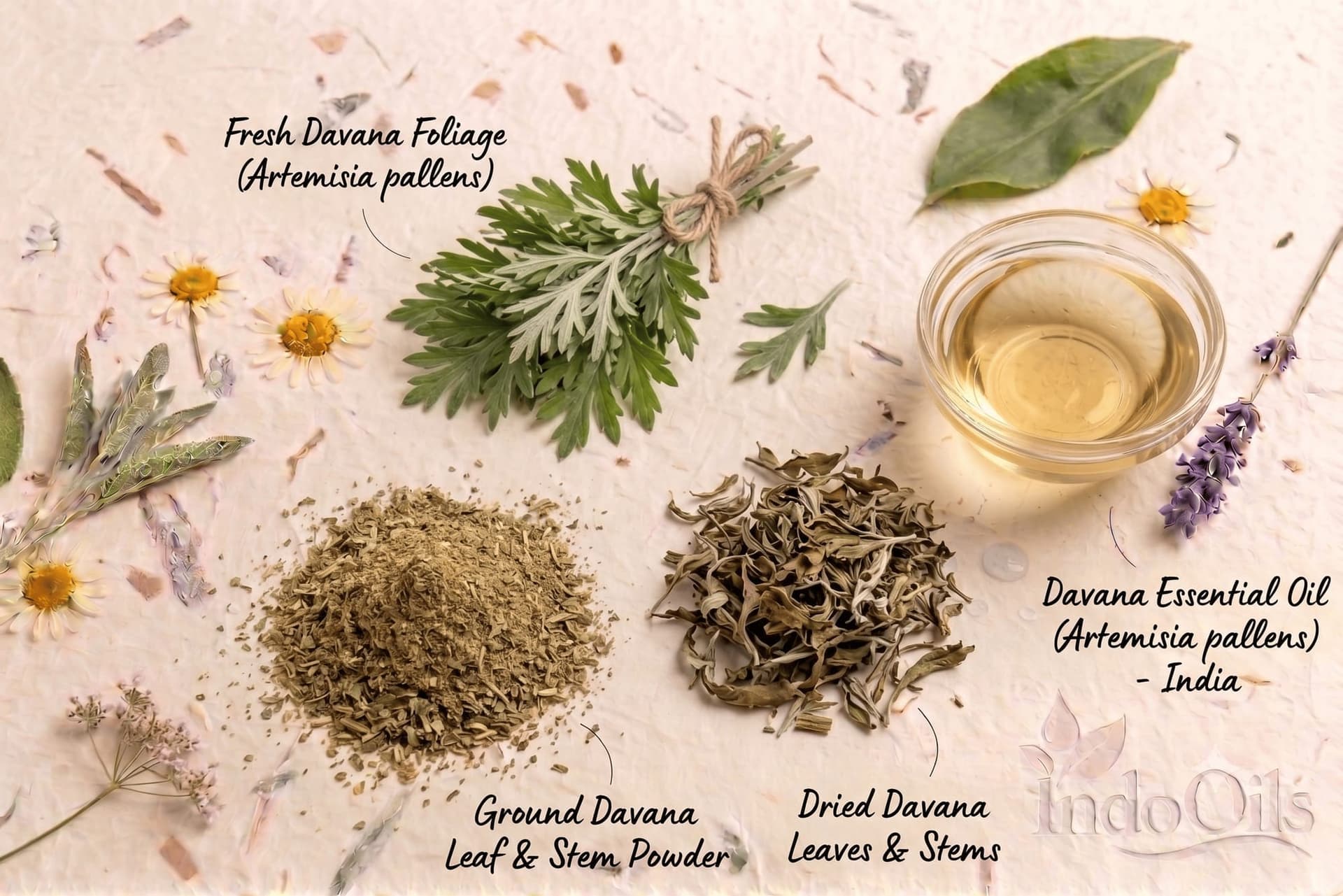
Davana (Artemisia pallens) is an aromatic annual herb in the daisy family, a relative of wormwood and mugwort. The flowering herb is cut, often wilted or partly dried, and steam distilled. The oil yield is low, so a large weight of herb is needed for each kilogram of oil. This is one reason davana sits at the premium end of the essential oil range.
The result is a dark yellow to amber oil with a rich, sweet, fruity and wine-like odour. Its character comes mainly from davanone, a sesquiterpene ketone that is usually the largest single peak on a davana chromatogram, supported by davana ethers, davana furans, linalool, nerol and esters such as ethyl cinnamate. Together they give davana a fruity depth that is hard to reproduce with other natural materials.
We offer two listings. Davana Essential Oil is our standard steam-distilled oil, and Davana Oil is listed in our organic essential oils range. Both are supplied with these identifiers:
- Botanical name: Artemisia pallens
- INCI name: Artemisia Pallens Flower Oil
- CAS number: 8016-03-3
- Plant part: aerial parts and flowers
- Extraction: steam distillation
- Origin: India
- Shelf life: 36 months in sealed original packaging
Why davana comes from India
Davana is a traditional South Indian plant. Its leaves and flowers have long been used in temple garlands and floral offerings, especially in Karnataka, and the commercial crop is still centred there, with smaller plantings in neighbouring states.
The crop follows a short, fixed season:
- Sowing takes place after the monsoon, in the cool months at the end of the year.
- Harvest comes about four months later, when the plant is in full flower, typically in the first months of the new year.
- Distillation follows straight after harvest, so most new-season oil becomes available in the first half of the year.
Because there is only one main crop a year from one region, a poor season affects the whole world's supply. Our article on climate volatility and wholesale pricing explains why buyers of crops like this often plan their annual needs early and agree on stock before the new season.
What to check on a davana oil test report
Davana is costly and produced in small volumes, so it is a natural target for dilution and "reconstitution". Common risks include cutting with cheaper essential oils or solvents, and boosting a weak lot with synthetic fruity esters. A proper certificate of analysis (CoA) and GC-MS report should let you rule these out.
Ask for, and check:
- GC-MS chromatogram for the lot, with davanone clearly shown as a major component and the main minor components listed. Compare it with a reference sample or a previous approved lot.
- No unexpected synthetic markers. Compounds that do not occur in natural davana oil, or esters at levels far above what the oil normally contains, are a red flag.
- Physical constants: specific gravity, refractive index and optical rotation. Dilution moves these out of their normal range.
- Solubility in alcohol. Davana should dissolve cleanly in ethanol. Cloudiness or separation suggests added fixed oils.
- Odour against a standard. Experienced perfumers can often spot a reconstituted davana on a smelling strip, because the dry-down loses its rounded, fruity body.
- Lot number and dates that match the label on the pack.
For cosmetics sold in the EU or UK, also ask for the safety data sheet (SDS) and an allergen declaration. Davana contains naturally occurring allergens such as linalool, which may need to be declared on the label above set thresholds. Our guide to fragrance allergen labelling explains what buyers usually need.
Where davana oil is used
A little davana goes a long way. It is mostly used at low levels to add warmth, fruitiness and depth.
- Fine fragrance. Davana gives fruity, boozy and chypre accords their richness. It sits well in oriental, gourmand and floral perfumes and gives a natural lift to fruity top and heart notes.
- Attars and natural perfumery. Indian perfumers pair it with sandalwood and white florals. Natural perfume brands use it as one of the few natural sources of a true dried-fruit note.
- Flavours. Davana oil is used in very small amounts in flavours for baked goods, confectionery, beverages and fruit profiles, and it is listed by FEMA as a flavouring substance (FEMA 2359). Food and flavour buyers should confirm the grade and their local regulations before use.
- Tobacco and shisha flavours. Its sweet, fruity, wine-like note is a traditional part of tobacco and hookah flavour blends, often alongside Tobacco Absolute.
- Cosmetics and personal care. Premium soaps, body oils, hair oils and lotions use davana for a distinctive scent and a strong Indian origin story.
Formulators should follow IFRA guidance and their own safety assessment for the end product and market.
Blending davana with other aromatics
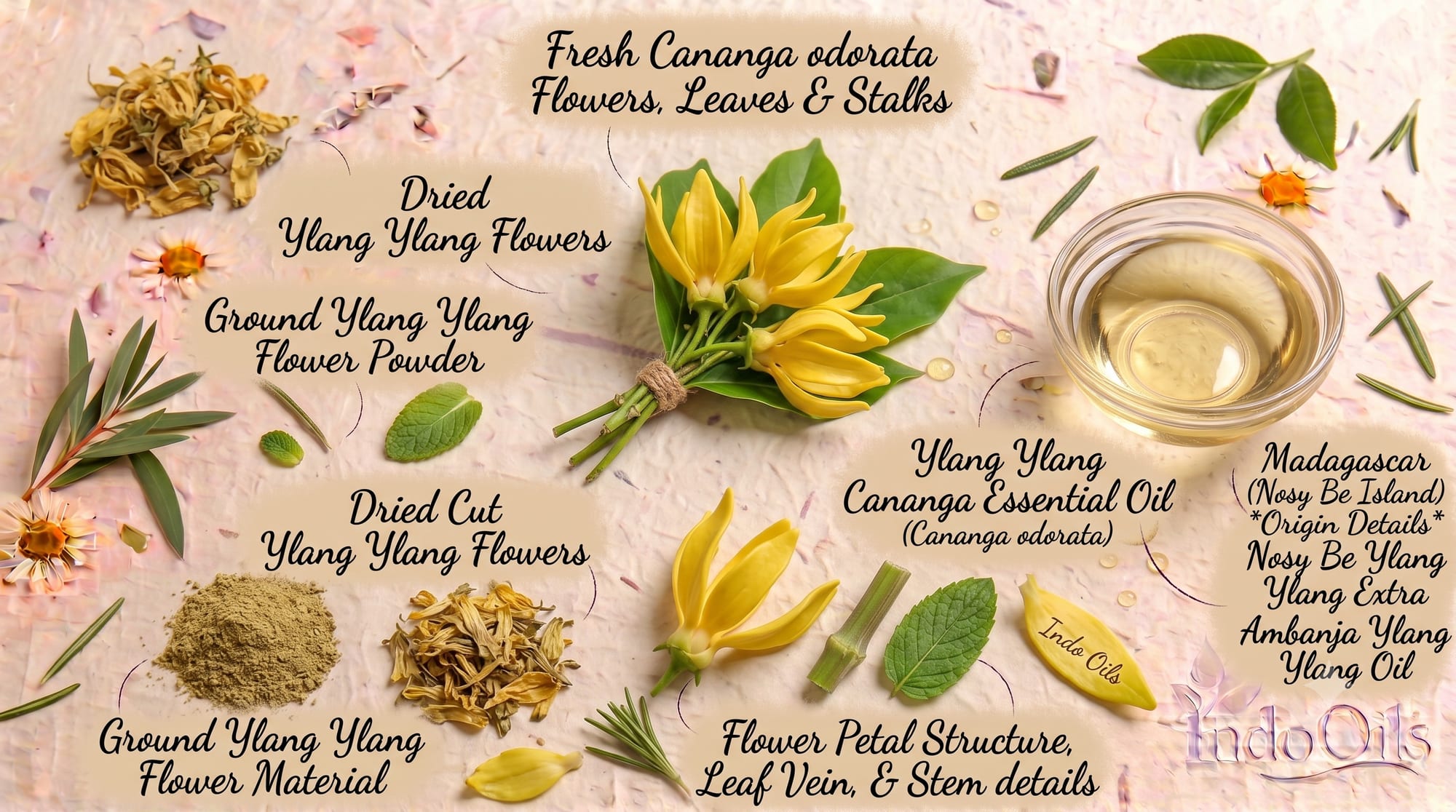
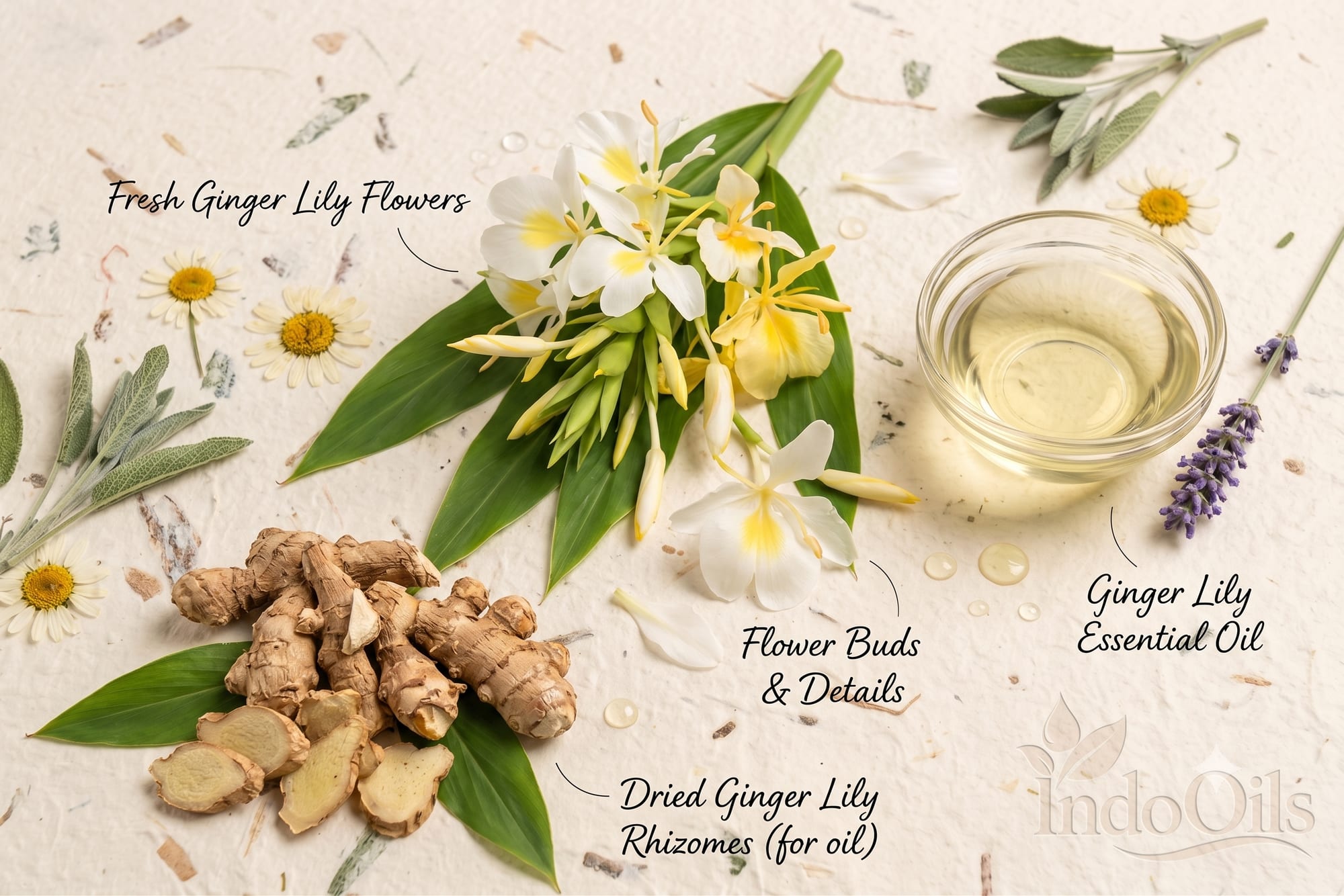
Davana is a team player. It rounds off sharp edges and adds a fruity glow to the oils around it. Popular partners include:
- Indian florals: Jasmine Sambac, Ginger Lily, White Champaca Absolute and Kewra Absolute.
- Exotic florals: Ylang Ylang (Cananga) and May Rose Absolute.
- Woods and bases: Sandalwood Essential Oil, Vetiver Oil and Benzoin Resinoid.
- Warm and spicy notes: Cinnamon Leaf, Clove Bud and Bergamot for brightness.
Our buyer's guides to sandalwood oil and vetiver oil cover two of its closest partners.
Storing davana oil
Davana oil is fairly stable, but like most essential oils it is sensitive to air, heat and light. To keep it in good condition:
- Store it in sealed, full containers in a cool, dark place.
- Keep the headspace small. Once a pack is opened, decant the rest into smaller containers instead of leaving a half-empty drum.
- Expect the colour to deepen slowly over time. This is normal, but always check odour against your standard before use in a new batch.
Ordering davana oil in bulk
We supply davana oil in 20 kg and 50 kg packs, with a minimum order of one pack. Every lot ships with a certificate of analysis and a safety data sheet, and GC-MS reports and specifications are available on request. Many of our documents are on the downloads page, and you can read how we track every lot on our traceability and quality assurance pages.
To get a quotation, send us:
Product (standard or organic) + quantity + application + destination country
Because davana is a once-a-year crop, it helps to tell us your expected annual volume so we can plan supply from the new season. You can request a sample to test the oil in your own formula, or send a bulk inquiry directly. If you are launching your own range, our private label service can fill and label it for you.
Browse the full essential oils range and our absolute oils for more Indian perfumery materials.
Buying in bulk?
20 kg and 50 kg packs, with a certificate of analysis for every lot.
Tell us the product, quantity and destination, and we will come back with a quotation.